Video testimonials: how to capture authentic guest reactions on camera
A guest stepping off a raft after their first class IV run is not thinking about marketing. They’re soaking wet, grinning, maybe a little stunned. That’s exactly when you pull out your phone.
Video testimonials shot in those raw moments do something polished brand videos never can - they show potential customers what it actually feels like to be there. Consumers who land on a booking page through a user-generated video are 184% more likely to purchase, and they spend 45% more. That’s not a rounding error; it’s the difference between a slow August and a full calendar.
This guide covers how to capture video testimonials from guests on-site, without a crew, without awkwardness, and without asking anyone to perform.
Why timing is everything
Most outfitters who try this get it wrong. They wait until guests are back at the parking lot, loading wet gear into cars, minds already on the drive home. By then the moment is gone.
The best window is the first two to five minutes after the high point of the experience - right at the takeout beach, the summit, the end of the zip line run. Adrenaline and emotion are still up. Guests haven’t had time to mentally edit their experience into a composed narrative. What comes out is unscripted, and that’s what converts.
For multi-day trips, there’s a second window: the final morning before departure, when guests have had time to reflect. You’ll get a different kind of testimonial - more thoughtful, less raw - but still genuinely valuable, especially for premium experiences where trust-building matters more than excitement.
How to ask without making it weird
The ask is where most guides freeze up, and that freezing is contagious. Guests feel the awkwardness and go stiff on camera.
Skip the formal pitch. Don’t say “would you mind if we filmed a testimonial for our website.” Say “hang on - before you climb out, I want to grab a quick video of you guys” and hit record. Frame it as capturing the moment for them, not a marketing exercise for you.
For groups, start with whoever’s visibly most excited. One enthusiastic person on camera gives everyone else permission to follow. Avoid asking the quietest person in the group first.
If someone declines, drop it immediately. One reluctant face on camera does more damage than no video at all. You’ll have other guests and other trips.
The questions that get real answers
Open-ended prompts produce authentic footage. Closed questions produce yes/no deadpan.
The single most reliable prompt: “What was the moment you’ll actually remember from today?” It’s specific enough to jog a real memory but open enough that guests fill it with their own story. You’ll hear things you couldn’t script.
Other prompts that work:
- “Was there a point today where you thought ‘okay, this is it’?”
- “What would you tell a friend who’s on the fence about booking this?”
- “How does this compare to what you expected?”
The last one is particularly useful because it surfaces the gap between pre-booking anxiety and the reality - exactly what hesitant future customers need to hear.
Avoid “how was it?” It’s too open and guests default to generic superlatives. “Amazing” and “incredible” in every other testimonial blur together into noise.
Gear that actually works on a working trip
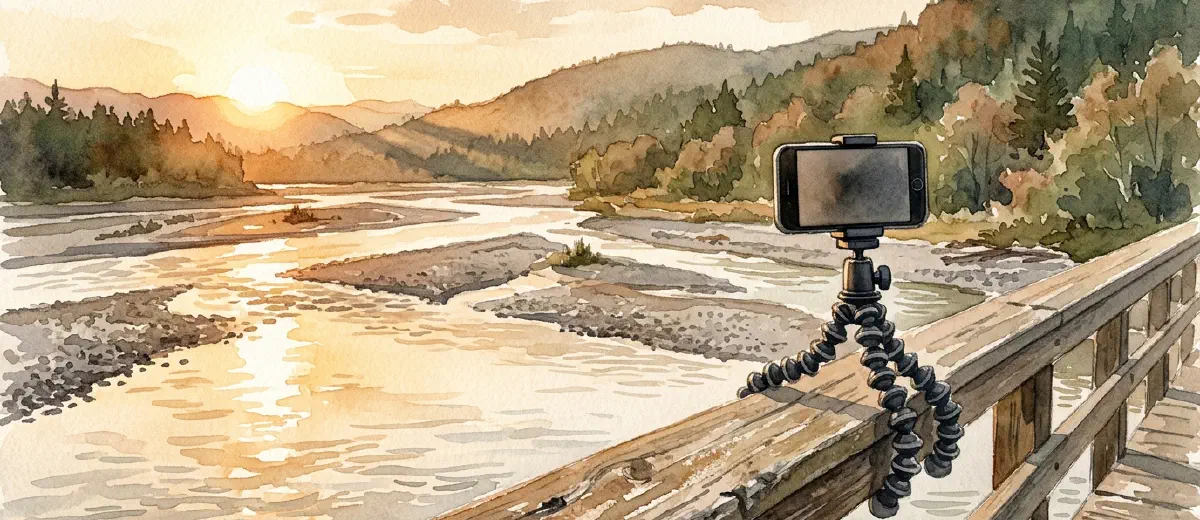
You don’t need a dedicated camera operator. You need a phone, a plan, and one piece of hardware: a stabilizer.
A gimbal in the $30-50 range - the DJI OM 6 or Hohem iSteady M7 both work - eliminates the shake that makes handheld phone footage look amateur. It folds into a dry bag and adds maybe four ounces to a guide’s kit. The difference in footage quality is dramatic.
Film in landscape orientation. Always. Vertical video gets cut or letterboxed in most of the places you’ll actually use this footage.
For audio, the biggest issue on outdoor testimonials is wind and water noise. Point the guest slightly away from the loudest water source. Get within three feet. Built-in phone microphones are surprisingly adequate when you’re close.
Lighting: shade is better than direct midday sun. Overcast days produce flattering, even light. If you’re at a sun-exposed takeout at 1pm, position guests with their backs to the sun and face you - the open sky acts as a soft fill light.
Getting legal permission without the paperwork headache
Before you publish any guest video, you need documented consent. This doesn’t have to be complicated.
The cleanest approach is to add a one-sentence video release to the existing trip waiver guests sign at booking. Something like: “You consent to being filmed during this activity and to [Company Name] using footage for promotional purposes, including on social media and the company website.” Have your attorney review the exact language - the concept is simple, even if the legal nuances vary by state.
For guests who weren’t covered in your waiver - walk-up bookings, guests who booked before you added the clause - a simple verbal confirmation on camera works as lightweight documentation. Start the recording with “is it okay if we share this on our social media and website?” and let them answer on camera before you ask the real questions.
The content rights guide for guest photos and videos covers the full legal picture if you want to go deeper on releases.
What to do with the footage
Capturing the video is only half the task. The ROI shows up in how you deploy it.
The highest-value placement is your trip booking pages - not buried in a gallery, but embedded near the “Book Now” button. Conversion lift from video on booking pages is real and well-documented. This is where hesitation happens, and a 45-second clip of a real guest answering “what would you tell a friend on the fence?” directly addresses that hesitation at the moment it matters most.
Google Business Profile accepts video uploads up to 30 seconds. A single genuine guest testimonial clip there does more for your local search presence than another round of stock photography.
Instagram Reels and TikTok: keep these under 60 seconds, and don’t over-edit. The research on this is consistent - mobile-shot authentic footage outperforms studio-produced alternatives by 63% on engagement. Slapping a filter and some music on a raw clip is fine. Cutting it into a cinematic production with voiceover and B-roll is probably a waste of time.
Email is underrated for this. A post-trip email with a short video clip from the trip - not a sales email, just the memory - builds the kind of relationship that generates referrals and rebookings. Drop the clip into the sequence you’re likely already sending.
For repurposing strategy, the video repurposing guide walks through how one piece of footage becomes seven different content formats. The user-generated content guide covers how guest photos and video work together as a broader social proof system.
Building it into a repeatable system
One great testimonial video is luck. Thirty is a system.
Assign the capture task explicitly. If you run guided trips, one guide per trip is responsible for attempting at least one video testimonial per trip. Make it a checklist item, not an afterthought. Track it the same way you track review requests.
Most operators start strong in June, get two or three clips, then stop because guide turnover happens or the summer crush takes over. The ones who actually build a library treat this as seriously as they treat safety checks - meaning it happens every trip, not most trips. The guides who capture the most footage are usually the ones you’ve given specific direction to, not general encouragement.
Review requests and video capture pair naturally. You’re already asking guests for a Google review at the end of the trip - the video ask can come two minutes earlier, at the takeout, before you launch into the post-trip debrief. The review request system covers the timing on that.
Storage and tagging: create a shared folder (Google Drive, Dropbox, iCloud) where guides can upload footage immediately. Tag by trip type, season, and guest demographic. When you’re building a social content calendar three months from now, you’ll want to find “family raft trip, summer, Colorado River” without scrolling through 400 unlabeled clips.
The footage you won’t capture is the footage you won’t have
A lot of outdoor businesses read articles like this, nod along, and then nothing changes.
The operators who build real video libraries are the ones who make the first ask on their next trip, even if it feels uncomfortable, even if the first clip is shaky and the audio is rough. That footage still converts. A real guest saying “I was nervous but by the end I wanted to go again” - shot on an iPhone 14 at a muddy riverbank - will outperform any brand video you could produce in a studio.
Start on your next trip. Pick the best moment, make the ask, and hit record.


