SEO for river cruise and paddlewheel operators: the complete guide to getting found online
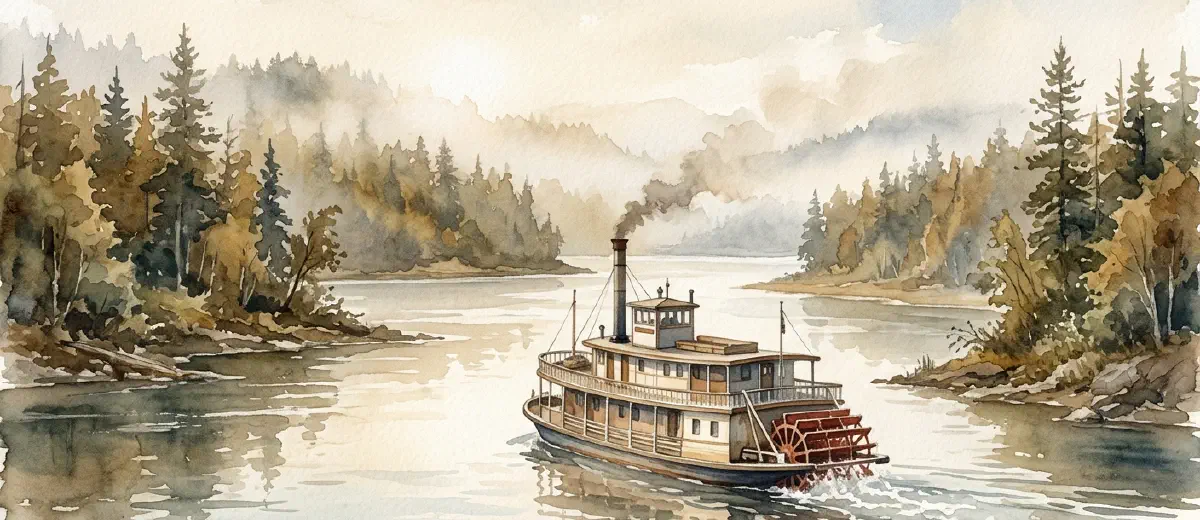
If you operate a river cruise or paddlewheel boat, most of your bookings start with a search. Someone types “Mississippi River dinner cruise” or “paddlewheel boat Memphis” or “Columbia River sightseeing cruise” into Google, and whoever ranks at the top of that page gets the reservation. Everyone below the fold hopes the customer scrolls down, or gets lucky with a referral.
River cruise SEO is specific. You’re not a general tour company and you’re not a hotel. You sit somewhere between attraction and experience, which means your customers search with a mix of local intent (“near me”), activity intent (“dinner cruise”), and destination intent (“Tennessee River”). Sorting out how those three search types overlap tells you which pages to build and what to put on them.
This guide covers keyword strategy, content that ranks, local SEO, technical basics, and the seasonal calendar that ties it together.
How river cruise customers actually search
The first mistake most operators make is assuming their customers search the same way the operators think about their own business. You might call it a “historic evening excursion aboard a classic sternwheeler.” Your customer types “dinner cruise on the river.”
Four search types drive most of the traffic for a river cruise operator.
The vessel-plus-location search is the highest-intent bucket. “Paddlewheel boat Memphis.” “Sternwheeler Portland Oregon.” “Riverboat cruise New Orleans.” The person searching this way already knows what kind of experience they want and where they want it. They’re comparing operators, not comparing activities. These terms belong on your homepage and your main trip pages.
Occasion searches come next. “Valentine’s Day dinner cruise.” “Corporate event riverboat.” “Birthday party boat Memphis.” “Anniversary cruise on the river.” When someone is searching for an occasion, they have a specific date and a budget in mind. They’re planning, not browsing. If you offer private charters or specialty cruises, every occasion you host deserves either a dedicated page or a section on your booking page with copy that matches those exact phrases.
Then there’s the experience search: “River sightseeing cruise.” “History tour riverboat.” “Live music dinner cruise.” “Sunset cruise [city].” These are about what happens on the boat, not the boat itself. People searching this way are often deciding what to do on an upcoming trip. They may not know your company yet. If your content answers what the experience is like, you’re the one who gets to introduce yourself.
Last is the planning search. “How long are river cruises.” “What to wear on a riverboat dinner cruise.” “Best time of year to cruise the Mississippi.” “Is a dinner cruise worth it.” These don’t convert directly. But they bring people to your site when they’re forming their opinion about what to book. If you answer those questions well, you’re the voice in their head before they start comparing prices.
Most operators have content for the vessel-plus-location searches. Almost none have content for the other three. That’s where the work is.
Building trip pages that rank and convert
Your trip pages are the most important pages on your site. They’re where the keyword and the booking come together, and most operators have weak ones.
A strong trip page for a river cruise is not a brochure. It doesn’t just say “Join us for a beautiful evening on the water.” It answers every question a potential customer has before they pick up the phone or hit the book button.
Cover the decision-making basics first: departure point and return point, trip length, what’s included (food, bar, live music), pricing for adults and children, departure days and times, what the vessel is like, and whether there’s indoor seating if the weather turns. If your page doesn’t have this information, a competitor’s page does, and that’s where the booking will go.
Then describe what the customer will actually see. If you’re cruising a stretch of the Mississippi past Civil War-era bluffs, say that. If your Tennessee River cruise passes a dam, mention it. If the Columbia River cruise at sunset catches the light on Mount Hood, put that in the copy. Specific place details accomplish two things: they rank for geographic and sightseeing keywords, and they give someone who’s never been to your city a mental picture of the trip. Both matter.
Photos matter too. Trip photos from actual cruises perform better than polished stock images for both SEO and conversions. Real photos from your trips tell a more credible story than anything a stock library can offer, and Google’s image search can bring in traffic that generic images never will.
If you offer multiple cruise types (a daytime sightseeing cruise, a dinner cruise, a private charter), each one needs its own page. Don’t combine them. A person looking for a dinner cruise and a person looking for a private charter are answering different questions, and one page trying to serve both will rank for neither.
Local SEO for river cruise operators
When someone searches “river cruise near me” or “dinner cruise [city name],” Google has two places to show results: the organic blue links and the map pack. The map pack is the cluster of three results with a map above them. Getting into that map pack requires local SEO, which is different from the content work above.
Your Google Business Profile is the starting point. Most cruise operators have one, but few have optimized it. Choose a primary category that matches your actual business. “Boat tour agency” or “cruise line” are both used, and you can add secondary categories like “Event venue” if you offer charters. Fill in the business description with specific mention of the rivers you cruise, the experiences you offer, and the city you depart from. Don’t use the description to stuff keywords awkwardly; write something a person would actually read, but make sure the geographic and experiential terms appear naturally.
Upload at least fifteen to twenty photos. These should include photos from the deck, photos of the boat from the dock or the riverbank, the dining experience if you serve food, and the views from the water. Real images from real trips. Google uses GBP photos in map results, and a profile with strong images stands out from competitors with four blurry shots uploaded years ago.
Reviews are the most powerful local ranking signal you have. They’re also where many operators underperform. A cruise is a built-in opportunity to ask for reviews because you’ve spent an hour or two with the customer. A follow-up email the next day with a direct link to your Google profile, or a brief mention at the end of the cruise that a review helps you reach more people, converts at a high rate. The key is timing and directness. Getting more Google reviews starts with a direct ask at the right moment, not a vague hope that satisfied customers will find your profile on their own.
Beyond your GBP, your name, address, and phone number need to be consistent everywhere: your website, TripAdvisor, Yelp, any tourism board listings, and any river-specific directories. Even small inconsistencies in how your address appears can confuse Google’s understanding of your business location. This is especially important for river cruise operators who sometimes list their business in multiple cities along a cruise route.
Content that works for river cruise operators
River cruise operators have a built-in advantage in content: the river itself. Most rivers have a lot of stories to tell, and content about the river will rank for searches that bring in your future customers.
Think about what the person searching for river cruises on the Mississippi actually wants to know. They want to know what they’ll see, what the history is, what the boat is like, and what they need to do to prepare. The content strategy almost writes itself.
“What you’ll see on a Mississippi River cruise through Memphis” is a destination content piece that ranks for searches like “what to see Mississippi River” and “Memphis riverfront attractions.” It brings in potential customers and people already planning a trip and starting to research what to do.
“The history of paddlewheel boats on the Tennessee River” has nothing to do with booking a cruise directly. But it builds topical authority for Tennessee River and paddlewheel searches, and the people reading it are interested in exactly the kind of experience you offer.
“Is a river dinner cruise worth it? What to expect if it’s your first time” answers a common pre-booking question and catches people who are considering but not yet convinced. A detailed, honest answer builds more trust than a sales page.
“When is the best time to take a river cruise in [your city or region]” ranks year-round and catches both early planners and tourists who just arrived. Answer it specifically: mention water levels, scenery, temperature, what’s in bloom or in season. The more specific, the better it ranks.
The volume of content matters. A website with two trip pages and an “about us” section will lose to a site with ten pages of relevant content, all other things equal. Publishing consistently over a full season compounds. Year-round SEO for a seasonal operation is about building authority during the months when it doesn’t seem urgent, so you’re visible by the time customers start searching.
Seasonal search patterns and the content calendar
River cruise businesses are seasonal. The Mississippi is navigable year-round in much of its length, but demand for leisure cruises spikes in spring and fall and quiets in the dead of winter. The Columbia River cruise season typically runs April through October. The Tennessee River peaks for tourism in summer. Understanding the search calendar for your specific river tells you when to publish, not just what.
For most mid-latitude river cruise operations, search interest starts climbing in February for spring and early summer trips. It peaks in April and May, holds through June and July, then drops in late August as fall planning picks up again. Holiday dinner cruise searches spike in October and November.
Your content calendar should work three to four months ahead of that. A post about “spring river cruises on the Columbia” needs to be indexed and ranking by March, which means publishing it in November or December. Publish it in April and it might rank in July, after your busiest booking window has closed.
October through February is when the real content work happens. Two pieces per month through winter gives you fifteen to twenty pages ranking by the time your phones start getting the spring calls.
Shoulder-season searches are their own opportunity. “Fall foliage river cruises on the Tennessee” is a distinct search with distinct timing. A piece targeting that query, published in August, will be indexed and ranking by September and October when fall visitors start planning. These pieces don’t require new trips. They require recognizing that different searches have different timing and that your content calendar should reflect that.
Technical basics you can’t skip
None of the content work above matters if your site has fundamental technical problems. These are the three that affect river cruise sites most often.
Speed is the most common issue. Boat and river photography is beautiful and tends to be high-resolution, which means large file sizes. A hero image that’s 8MB will slow your site to a crawl on mobile, and most river cruise searches happen on phones. Before publishing any new content, compress photos to under 200KB without visible quality loss. Tools like Squoosh or Imagify do this without much effort. A site that loads in under two seconds keeps visitors. One that takes five seconds loses them to the next result on Google.
Mobile layout is closely related. Booking forms, pricing tables, and trip detail pages are often built for desktop and break on small screens. Check your site on a phone. Try to complete a booking. If the form requires horizontal scrolling, the phone number is too small to tap, or the calendar widget doesn’t work with a thumb, you’re losing conversions right at the moment when someone is ready to pay. Slow or broken mobile experiences cost real bookings, and fixing them often produces faster results than any new content you could publish.
Structured data is less urgent but worth doing. Adding schema markup to your business and your individual trip pages helps Google understand what your site is about and can trigger enhanced search results with star ratings, pricing, and departure details visible directly in the results page. For a dinner cruise, even a basic LocalBusiness schema with your correct hours, location, and phone number helps.
The compounding effect of showing up consistently
The first few months of publishing content feel like work with no visible return. Search Console shows a trickle of impressions for keywords you barely rank for. Your trip page rankings don’t move. This is the stretch where most operators give up.
But the curve isn’t linear. Around the six-to-twelve month mark, a body of indexed content, a growing pool of reviews, and a handful of directory links reach a kind of critical mass. Pages that were on page three move to page one. New searches start sending traffic. The map pack position locks in. The work you did in November shows up in March.
A paddlewheel operation that has spent two seasons on this has a search presence that’s genuinely hard to dislodge. A competitor can build a nicer website or run more ads, but they can’t manufacture two years of indexed content and accumulated reviews in a sprint. That gap takes time to close.
Start with what you have. Weak trip pages? Improve one. Thin GBP photos? Add ten. No new content in six months? Write something about the river this week. The individual steps are not complicated. The returns are a function of how long you keep doing them.