How to rank for 'things to do in Whitefish' and turn it into bookings
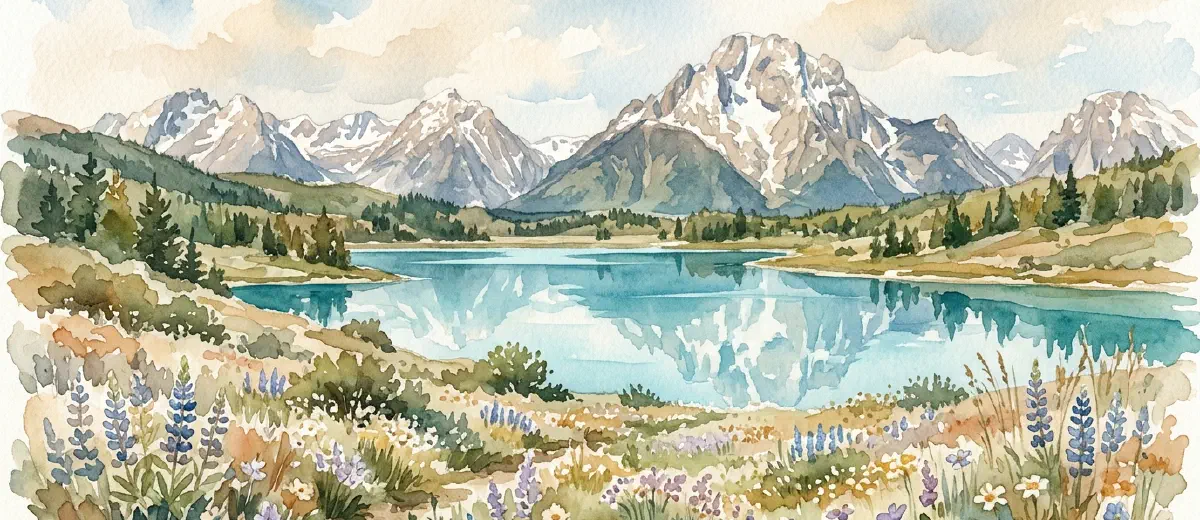
“Things to do in Whitefish, Montana” gets searched thousands of times every month. The people typing it are not locals looking for weekend plans. They are visitors with money to spend, time to fill, and no idea yet who is going to take them fishing, put them on a raft, or point them toward the right trailhead.
Right now, that search sends most of them to TripAdvisor, Expedia, and the Whitefish CVB site. If you run an outfitting business in the Flathead Valley and you are not showing up for that query, you are invisible at the exact moment someone is deciding how to spend their trip.
Here is how to get your business onto page one for that query and then do something useful with the traffic once it shows up.
Why this query matters more than your brand name
Someone searching your business name already knows you exist. That traffic is nice but it is small and it was coming anyway. “Things to do in Whitefish” catches people earlier, when they are still open to suggestion. Whitefish pulled 1.45 million non-resident visitors in 2023, according to the University of Montana’s Institute for Tourism and Recreation Research. Nearly half a million of those stayed at least one night. A huge chunk of them searched for what to do before or after they arrived.
Mid-size tourist towns typically see 10,000 to 30,000 monthly searches for their “things to do” query. Whitefish sits in that range, with seasonal spikes that run from May through September and another bump around ski season. That is more search volume than almost any other keyword connected to your business. And the intent behind it is about as good as it gets: these people want to do something and they have not picked what yet.
If you want to understand what your customers are Googling before they book, this query is near the top of the list.
What is actually ranking right now (and where the gap is)
Pull up an incognito browser and search “things to do in Whitefish MT.” You will see TripAdvisor, Expedia, a few travel blogs, and the Explore Whitefish CVB page. What you will not see is a local outfitter.
TripAdvisor’s page is a scraped list of user-submitted reviews. Expedia’s is a generic travel guide that could describe any mountain town with a ski resort. The travel blogs are written by people who visited for a long weekend and took notes.
None of those pages can describe what it feels like to float the Flathead River at dusk in August or explain why the Whitefish Trail’s Beaver Lakes loop is better on a Tuesday morning than a Saturday.
You can. And Google rewards that specificity. A well-structured page with real local depth can rank alongside or above the aggregators, especially when it picks up local links and engagement signals over time.
Build the page like an area guide, not a brochure
The pages that rank for “things to do” queries are long, specific, and actually useful to someone planning a trip. They are not bullet lists with one-sentence descriptions. Think 2,000 to 3,000 words covering every major activity category.
Start with what Whitefish does best: outdoor activities. Structure it by season or by activity type. Cover fly fishing on the Flathead and Whitefish rivers. Cover rafting with operators like Glacier Guides and Montana Raft. Cover the Whitefish Trail system, which runs 40-plus miles with options for every fitness level. Cover skiing and snowboarding at Whitefish Mountain Resort, with its 3,000 acres and 15-minute drive from downtown.
Then fill in the non-outdoor pieces: downtown restaurants, breweries, the summer art fair, the huckleberry festival in August. Glacier National Park access. These sections round out the page and match the full scope of what someone searching “things to do” actually wants.
Give each activity real detail. Not “enjoy world-class fly fishing” but something like “the Flathead River between Columbia Falls and Kalispell produces solid dry fly action for cutthroat and bull trout from late June through September, and most guided half-day floats launch from a put-in about 20 minutes south of town.”
Lakestream Outfitters and Arends Fly Shop both operate out of Whitefish and can speak to this with authority. If that is your business, your things-to-do page should prove it.
Connect every section to a booking path
A things-to-do page that just informs is a missed opportunity. Every activity section should link to the corresponding service page on your site.
Mention fly fishing, link to your guided trip page. Mention rafting, link to your rafting trips. Mention a scenic float, link to that specific trip listing. This turns a top-of-funnel informational page into a mid-funnel consideration page where readers self-select into the activity they want and land on a page where they can book.
Do not bury the path to booking. After two or three paragraphs about an activity, drop in a sentence like “We run half-day floats on this stretch from June through September, with morning and afternoon departures” and link it to the trip page. The reader who is ready to book should never have to look for the next step.
If your landing pages are built to actually convert, this flow works. If they are not, fix the landing pages first. A things-to-do page sending traffic to a weak trip page is a leak in the funnel.
Get the technical details right
Good content on a poorly built page will not rank. The technical setup matters just as much.
Your H1 should include the target phrase. Something like “Things to do in Whitefish, Montana: a local guide” works fine. Your URL slug should include the core phrase too. Write a meta description under 155 characters that makes someone want to click.
Add schema markup to the page. TouristAttraction schema, LocalBusiness schema, and FAQ schema all apply here. Pages with proper schema markup rank an average of four positions higher than pages without it, and they get richer search result displays that pull more clicks.
Make sure the page loads fast on mobile. Seventy-six percent of mobile local searches lead to a visit or contact within 24 hours, and Google uses page speed as a ranking factor.
Use your own photos, not stock images. A photo of an actual guided trip on the Flathead River does more for credibility than a generic mountain landscape from a stock library.
Keep it current and build links over time
A things-to-do page is not a set-it-and-forget-it piece. Update it each season. Add the new summer event lineup. Adjust pricing if it has changed. Swap in fresh photos from recent trips. Google notices when content stays current, and so do readers.
The page also needs backlinks to rank competitively. Reach out to the Whitefish Chamber of Commerce, the Explore Whitefish CVB, and local lodging partners. If a vacation rental or hotel in Whitefish links to your things-to-do page as a resource for their guests, that is a high-quality local backlink that directly supports your rankings. The Whitefish Trail Foundation, Glacier National Park partner sites, and regional tourism blogs are all reasonable link targets.
Over time, a strong things-to-do page becomes your highest-traffic entry point. Wild Trout Adventures, Whitefish Outfitters, Atlas Outfitting, and every other operator in the valley is competing for the same pool of visitors. The one with the best things-to-do page gets first contact with the largest share of them.
The page is the strategy, not a side project
Ranking for “things to do in Whitefish” is not a content marketing experiment. It is a direct line to the 484,000 people who stayed overnight in 2023 and the hundreds of thousands more who drove up for the day. Most of them searched some version of this query before they arrived.
The business that shows up with a useful, locally informed, well-linked page is the one that gets the booking. Build the page. Link it to your trips. Keep it updated. That traffic is already there.