How to rank for 'things to do in Grand Canyon area' and turn it into bookings
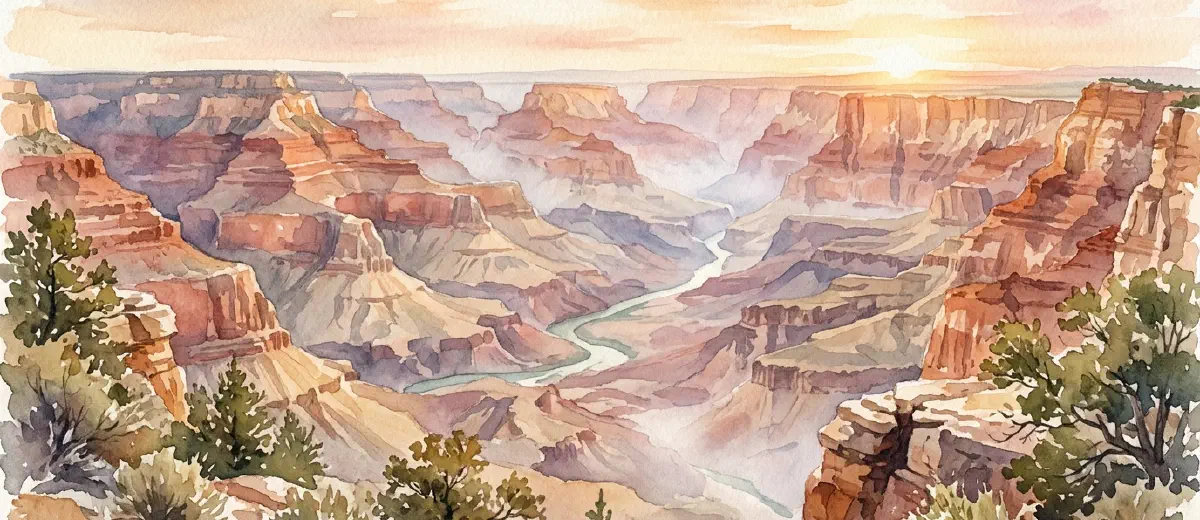
Nearly five million people visited Grand Canyon National Park in 2024. They spent over $900 million in nearby communities. And most of them started their trip planning the same way you’d expect: typing “things to do in Grand Canyon” into Google.
If you run a tour company, rafting outfit, or any outdoor business in the Grand Canyon area, that query is the front door. The people making that search haven’t booked anything yet. They’re figuring out how to spend their time and money, and they’re open to suggestions.
Right now, TripAdvisor, Expedia, and GetYourGuide own that search result. Your business probably doesn’t show up until page two or three. But you have something those sites don’t: you actually operate there. Here’s how to turn that into a page that ranks and books trips.
Understand what people are really searching for
“Things to do in Grand Canyon” is the broad query, but the long-tail variations are where the real opportunity lives. People search for “things to do near Grand Canyon with kids,” “things to do at Grand Canyon South Rim in winter,” “best things to do near Grand Canyon besides hiking.” Each variation tells you something specific about what that person needs.
Start by listing the searches your actual customers would make. If you run a rafting company out of Marble Canyon, your people are searching “Grand Canyon rafting trips,” “things to do near Grand Canyon besides the rim,” and “Colorado River day trips.” If you run jeep tours near Tusayan, your customers are typing “Grand Canyon tours from South Rim” and “things to do near Grand Canyon for families.”
You know your customers better than a keyword tool does. Write for them.
The local keyword playbook covers how to build a full keyword list for your area.
Build a page that outperforms the aggregators
TripAdvisor’s Grand Canyon page is a list of user-submitted reviews and business cards. Wide but shallow. You can beat it by going deep on what you actually know.
Arizona River Runners has been guiding Colorado River rafting trips since 1970. If they wrote a things to do page for the Grand Canyon area, they could cover rafting in a way no aggregator can touch: which sections of the river work best for first-timers, what a typical day on a multi-day trip looks like, what the company provides versus what you need to bring yourself. That kind of detail is what Google rewards and what someone planning a trip actually wants.
Your page should cover eight to twelve activities, but go deepest on the ones tied to your business. Two to three paragraphs per activity, with specifics. The Bright Angel Trail is 9.5 miles to the river and back. South Kaibab to Ooh Aah Point is 1.8 miles round trip, doable in under two hours for most people. The Rim Trail is paved and flat for most of its length, fine for strollers. That kind of granularity separates a useful page from a listicle.
Connect every section to your booking flow
Traffic without bookings is just a vanity metric. Every section on your things to do page should have a clear path back to your services.
Say you’re a rafting company and you’ve written a section on Colorado River trips. End it with a line about your specific offerings and a link to your trip page. No hard sell, just a next step: “We run three-day, seven-day, and fourteen-day guided rafting trips through the canyon from April to October.” Link. Done.
Hatch River Expeditions, the oldest rafting outfitter on the Colorado (operating since 1934), does this well on their site. They pair trip descriptions with availability calendars on the same page. A visitor reading about a seven-day motor trip can see open dates without clicking away. Fewer steps between interest and a booking.
Include a sample itinerary, too. “Day one: hike South Kaibab to Ooh Aah Point in the morning, drive to Desert View Watchtower in the afternoon, catch sunset at Lipan Point. Day two: full-day rafting trip on the Colorado.” Itineraries keep people on the page longer and put your trip at the center of their visit.
Our guide on landing pages that actually book trips goes deeper on conversion.
Get the on-page SEO right
Put “things to do in Grand Canyon area” in your title tag, your H1, and your opening paragraph. Match the search query. This is not the place for clever wordplay.
Write a meta description under 155 characters that includes the location and a reason to click. Something like: “A local guide to Grand Canyon area activities, from river trips to rim hikes, with booking info and seasonal tips.”
Use H2 headers for each activity: “hiking bright angel trail,” “colorado river rafting trips,” “scenic drives along desert view road.” Each H2 can rank on its own for a long-tail search, turning every section into a separate entry point from Google.
Add LocalBusiness and TouristAttraction schema markup to help search engines parse the page. Schema alone won’t jump you from page five to page one, but it can earn you richer results that pull more clicks.
Use your own photos. A shot of a customer on the river at Lava Falls is worth more than a generic canyon sunset from a stock library. Real images from real trips carry more trust with readers and with Google.
Make your google business profile work harder
For local searches near the Grand Canyon, your Google Business Profile matters as much as your website. When someone standing at the South Rim searches “rafting trips near me,” the map pack comes from GBP, not from your blog.
Fill out every field. Post updates during your booking season. Upload fresh photos. Ask customers for reviews and respond to all of them. Pink Jeep Tours, one of the most visible operators in the Sedona-Grand Canyon corridor, maintains hundreds of recent Google reviews. That review volume is a direct factor in their map pack visibility.
Your business name, address, and phone number need to match exactly across your website, GBP, TripAdvisor, Yelp, and any outfitter directories. Mismatches confuse Google and cost you ranking. Our piece on setting up your Google Business Profile walks through the full setup.
Update the page and expand over time
A things to do page is not a project you finish once. The Grand Canyon area changes by season: North Rim closes mid-October through mid-May, river trips run April through October, desert heat makes summer rim hiking dangerous, fall brings smaller crowds and cooler air. Update your page at least twice a year so the content matches what’s actually happening on the ground.
Once your main page is ranking and pulling traffic, build variations. “Things to do near Grand Canyon with kids.” “Things to do near Grand Canyon in winter.” “Things to do near Grand Canyon besides hiking.” Each one targets a different long-tail query and pulls in a different type of visitor.
The Grand Canyon gets nearly five million visitors a year. Most of them search for what to do before they arrive. If your business is the one answering that question with real local knowledge and a clear way to book, you don’t need to outspend Expedia. You just need to out-know them.