Outdoor recreation marketing in Utah: the keywords, competitors, and opportunities
Utah’s outdoor recreation economy hit $9.75 billion in 2024, accounting for 3.3 percent of the state’s GDP and supporting over 75,000 jobs. The Mighty 5 national parks pulled in 11.1 million visits that same year. State parks added another 12.9 million. People are coming to Utah in big numbers, and most of them plan with a search engine before they arrive.
If you run a rafting company on the Colorado, a climbing guide service in Moab, an ATV rental near the Paiute Trail, or any other outdoor operation in the state, your potential customers are already typing queries into Google weeks before their trip. This guide covers what they search for, who ranks for those terms today, and where the gaps are.
How utah outdoor searches are shaped by geography
Utah’s search market splits along geographic lines more than almost any other state. Southern Utah draws the national park crowd. Moab is its own search ecosystem for rafting, climbing, canyoneering, and off-road trips. Northern Utah gets ski and snowboard searches in winter and hiking and mountain biking queries in summer. Central Utah is quieter online but has growing search interest around the Paiute ATV Trail and Fishlake National Forest.
These regions don’t overlap much. Someone searching “Cataract Canyon rafting trip” and someone searching “ski resort near Salt Lake City” are different people planning different trips. Your website needs pages built around the specific place and activity you operate in, not a generic “Utah adventures” page that tries to cover everything.
Seasonality is more compressed than you might expect. Peak outdoor search volume runs March through October, with a spike for river and canyon activities in April and May as people plan summer trips. Ski searches peak November through January. If you run a summer operation, your content needs to be indexed and ranking by late winter. Understanding the lead time between when people search and when they book changes how you plan your publishing schedule.
Keywords that matter for rafting and river operations
Rafting is one of Utah’s highest-volume outdoor search categories, and most of it runs through Moab. “Moab rafting,” “Colorado River rafting Moab,” “Cataract Canyon rafting,” and “whitewater rafting Utah” are the core terms. Each one gets steady monthly volume from about March through September.
Broad searches like “rafting in Moab” capture people still deciding what river section to run. More specific searches like “Cataract Canyon multi-day rafting trip” or “half day float trip Colorado River Moab” come from people who have already narrowed their plans. The specific searches convert better because the person has already decided what kind of trip they want.
Beyond Moab, there are river searches most operators ignore. The Green River through Desolation Canyon pulls searches from a smaller but committed audience. The San Juan River near Bluff has its own cluster of queries. If you operate on either of those stretches, the online competition is thin compared to Moab, and your pages can rank faster.
Trip-type and experience-level keywords add another layer. “Family rafting trip Utah,” “beginner rafting Moab,” “Moab rafting with kids,” “overnight rafting trip Utah” each represent a different customer. Your trip pages should mirror how people actually search, not how you organize your internal trip menu.
Rock climbing, canyoneering, and guided adventure searches
Moab and the surrounding area dominate Utah’s climbing search traffic. “Rock climbing Moab,” “guided climbing Moab,” “Indian Creek climbing,” and “canyoneering Moab” are the main terms. Indian Creek has a reputation among climbers that generates year-round search interest even though the climbing season is not.
The search results for climbing in Utah have a gap that favors guide services. Most of the content ranking for Utah climbing searches comes from route databases like Mountain Project, travel blogs, and media outlets. Actual guide service websites often sit below the fold or on page two. If you run a guiding operation and publish detailed pages about what a guided day at Indian Creek looks like, what the approach involves, what skill level you need, and what it costs, you can rank where the databases can’t. They don’t offer that information.
Canyoneering is a growing search category in Utah. “Canyoneering near Zion,” “slot canyon tours Utah,” and “beginner canyoneering Moab” are all gaining volume as more travelers look for that experience. Many operators bundle canyoneering with climbing, but the search data says these are separate audiences. Someone searching “slot canyon tour Zion” is often a first-timer looking for a guided walk, not a technical climber. Give canyoneering its own page on your site. Keep it separate from climbing.
The off-road and ATV opportunity
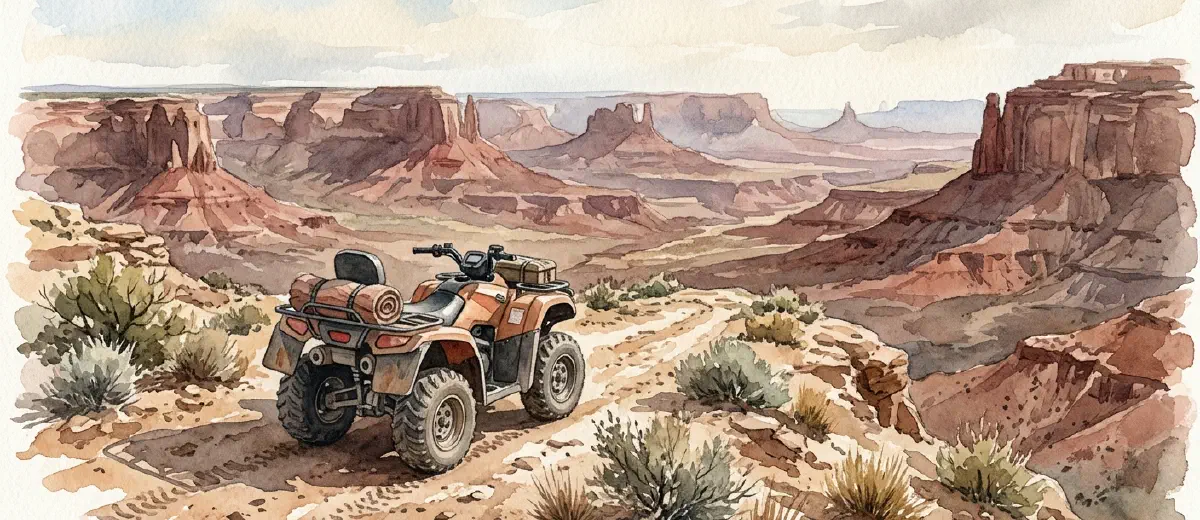
Utah has over 80,000 miles of public OHV trails, and the search interest reflects that. “ATV rental Moab,” “UTV tours Utah,” “Paiute Trail ATV,” “Sand Hollow ATV,” and “Little Sahara off-roading” all carry steady volume. The off-road market here is large enough to support distinct sub-niches: sand dune riding, rock crawling, scenic trail touring, and multi-day backcountry trips.
What makes the ATV and UTV keyword space different is that the aggregator platforms are weaker here than they are for rafting or climbing. Search “ATV rental Moab” and you will find more local operator websites on page one than you would for “rafting Moab.” Off-road rentals and tours are harder for platforms like Viator to standardize, so they haven’t built as much content around them. That gives operators who build solid pages for these terms a better shot at ranking.
The Paiute Trail system in central Utah deserves its own mention. It spans over 900 miles and draws riders from across the West, but online competition for Paiute-related keywords is thin. “Paiute Trail ATV rental,” “Paiute Trail map and guide,” “best sections of the Paiute Trail” are all searches with volume and few strong results. If you operate anywhere along that corridor, from Richfield to Marysvale to Junction, building content around the trail system puts you in front of riders who are already planning a trip.
Who you are competing against online
Your SEO competition in Utah is not just the outfitter down the road.
Viator, GetYourGuide, TripAdvisor, and AllTrails own page-one results for most broad Utah outdoor searches. They have domain authority you cannot match on terms like “things to do in Moab” or “Utah outdoor adventures.” Don’t chase those terms. You will lose.
Destination marketing sites like VisitUtah.com and DiscoverMoab.com rank well for informational queries. Getting listed on them is worthwhile because they send referral traffic. But their content is broad by design and doesn’t replace the need for your own pages.
Your direct competitors, the other operators in your market, are often easier to outrank than you’d think. Most outdoor business websites in Utah follow the same template: a homepage, an “about” page, a page listing trip options with a few sentences each, and a contact form. Operators who build dedicated pages for each trip type, each location, and each season will pass those who don’t. A rafting company that publishes separate pages for “half-day float trip,” “full-day whitewater trip,” “Cataract Canyon multi-day,” and “family float trip” is going to collect more search traffic than a competitor with a single “our trips” page.
Some of the best-known Utah outdoor companies, OARS, Western River Expeditions, Mild to Wild, have been building web presence for years. They rank well partly because they have been at it longer. But they also tend to sit on older content. Fresher, more specific pages can win individual keyword battles even against established names.
Content gaps worth targeting
Across Utah’s outdoor niches, a few types of content are consistently missing from operator websites.
Condition and timing content is the biggest gap. “Best time to raft Cataract Canyon,” “Moab weather in April,” “when to visit Arches to avoid crowds,” “Indian Creek climbing season” are all searches from people actively planning a trip. Most operators know the answers but never put them on their website. A seasonal update post answering these questions creates a stream of indexed pages that each target a different keyword.
Area and logistics content is another. “Where to stay near the Paiute Trail,” “camping near Moab,” “what to pack for a Cataract Canyon trip,” “how to get to Indian Creek from Moab.” Your customers ask you these questions every week. Put those answers on your site, and you catch people during the planning phase when they are building a shortlist. That kind of local, practical content is what builds topical authority.
Comparison content is the third. “Cataract Canyon vs Grand Canyon rafting,” “Indian Creek vs Red Rocks climbing,” “half day vs full day Moab rafting trip.” These searches come from people close to booking but weighing options. If your site helps them decide, you are the operator they remember.
Where to start
Pick the one search term that represents your highest-value booking and build a page for it. If you run rafting in Moab, that might be “Cataract Canyon rafting trip.” If you run ATV tours on the Paiute Trail, it might be “Paiute Trail ATV rental.” Make the page specific. Include what the trip involves, what it costs, what guests should expect, and your own photos from the trail or river.
Then build outward. One page per trip type. One page per location or trail section. A blog post each week answering a question your customers ask before they book. Over six months, that turns into 30 or more indexed pages, each one reaching a search you were invisible for before.
Set up or clean up your Google Business Profile. Utah outdoor businesses depend on “near me” searches from tourists already in the area, especially in gateway towns like Moab, Springdale, and Vernal. Your GBP listing, reviews, and local citations matter as much as your website for those searches.
Utah gets over 24 million visits to its national and state parks combined. The people are coming. Most operators in the state are not showing up when those visitors search.