How to turn one trip into five pieces of content
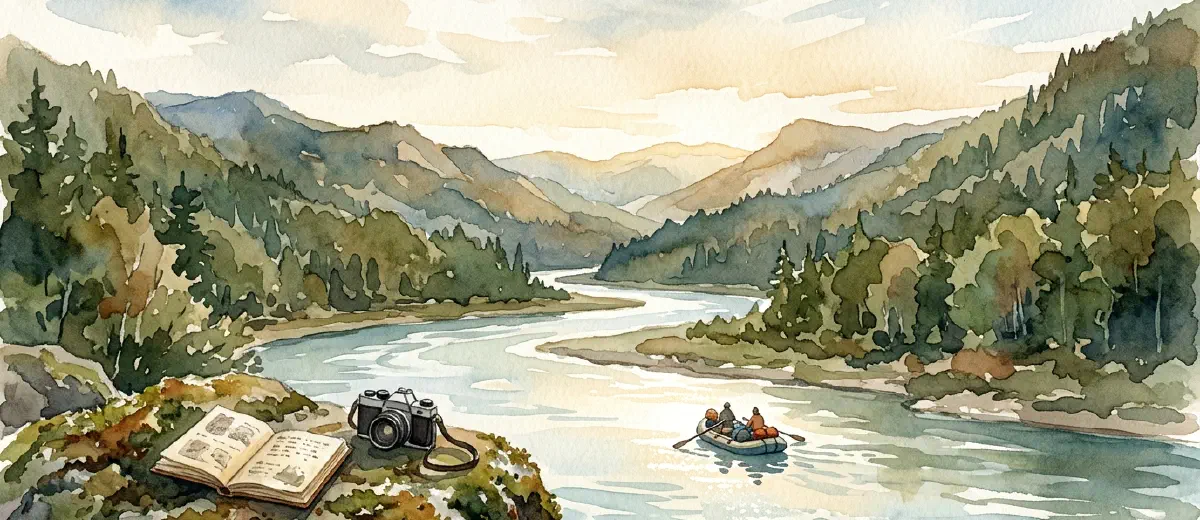
You ran a half-day rafting trip on the Nantahala last Saturday. Eight guests, sunny skies, one swimmer in Patton’s Run. Everyone had a great time. Monday morning you’re back to answering the phone and rigging boats.
That trip you just ran? It’s a content goldmine. And content repurposing is the fastest way for an outdoor business to build a real online presence without spending hours you don’t have creating things from scratch.
Most operators think “making content” means sitting down at a computer and writing something clever. It doesn’t. It means capturing what’s already happening on the water, on the trail, on the river, and packaging it for the people who are Googling you right now. One trip, handled right, gives you at least five distinct pieces of content that serve five different purposes.
Let’s walk through it with that Nantahala trip.
Capture the raw material while you’re out there
Before we get into the five content pieces, you need the ingredients. This takes about ten extra minutes during the trip, not after.
Shoot 5-10 short video clips on your phone. The put-in, a rapid, guests laughing, the scenery, the take-out. Fifteen seconds each is plenty. Horizontal for YouTube, vertical for Instagram and TikTok.
Take a handful of photos. The group at the start, action shots on the water, the river itself. If your guide can grab a waterproof camera during the trip, even better. If not, get photos at the put-in and take-out.
Make a mental note of two or three things guests said or asked. “Is this rapid the big one?” “I can’t believe how clear the water is.” “My kids are going to be so jealous.” These are real quotes you can use. You don’t need a recording, just remember the gist.
That’s it. You now have everything you need to create a week’s worth of content.
Piece one: a blog post
Take the trip you just ran and write about it. Not a press release, not a sales page. A real account of what happened on the water that day.
“What a half-day on the Nantahala actually looks like” works as a title. Walk through the experience: meeting at the outpost, the safety talk, the first few rapids, the calm stretches where you can look around, Patton’s Run, the take-out. Include the details that make it real. The water temperature. The fact that someone’s sunglasses went in at Nantahala Falls. How the kids in the raft behind you screamed the entire time.
This kind of post does two things. It ranks for long-tail searches like “what to expect Nantahala rafting” or “Nantahala River rafting experience.” And it answers the anxiety questions that keep people from booking: What’s it really like? Is it scary? Will my family enjoy it?
If you’re not sure what to blog about week to week, trip recaps are the easiest starting point. You already lived it. Just write it down.
Piece two: social media content
Pull two or three of your best photos and one video clip from the trip. That’s at least three social media posts.
Post a photo of the group at the put-in with a caption like “Saturday’s crew before they hit Patton’s Run. Nobody knew what was coming.” That’s an Instagram post. It’s also a Facebook post. You can run it on both without changing a thing.
Post a 15-second video clip of guests hitting a rapid. Add a text overlay with the rapid name. That’s a Reel or a TikTok. These short clips consistently outperform polished promotional videos because they look real, because they are real.
Post a scenic shot of the river with a caption about conditions. “Nantahala running at 2.1 feet today. Clean lines through everything.” That’s content for the paddling community and it signals that you’re active and current.
Three posts from one trip, and none of them required a graphic designer or a content calendar meeting.
Piece three: an email to past guests
Take one photo from the trip and write a four-sentence email to your past guest list. Something like:
“We just wrapped up another great half-day on the Nantahala. Water’s running clean, weather’s finally cooperating, and the rapids are hitting perfect for families. If it’s been a while since your last trip, we’ve got openings this month. Book here.”
That’s it. No fancy template, no five-paragraph newsletter. A photo, a few sentences, a link. Past guests already know who you are and what you offer. They just need a nudge. A real photo from a real trip this week is more persuasive than any stock image or designed email blast.
Send one of these every two weeks during your season and you’ll see repeat bookings climb. If you’re wondering how often to publish across all your channels, a biweekly email cadence is a good baseline for most operators.
Piece four: an FAQ update
Every trip surfaces questions you forgot you get asked all the time. Saturday’s Nantahala trip probably included at least one of these:
“What shoes should I wear?” “Can we bring our own snacks?” “Where do we park?” “What happens if it rains?”
Pick one and add it to your FAQ page. Or better yet, add it to the specific trip page where people are making their booking decision. A trip page with ten real, well-answered questions signals authority to Google and removes friction for the person about to click “Book Now.”
Over the course of a season, you’ll build an FAQ section that covers everything a first-timer wonders about. That’s good for customers and good for SEO, especially if you use FAQ schema markup, which can get your answers displayed directly in Google search results.
You can also turn a particularly good FAQ answer into a standalone blog post. “What shoes should I wear for Nantahala rafting?” is a real search query with real volume.
Piece five: a short video clip
You already shot the raw footage during the trip. Now spend five minutes editing one clip.
Pick the best 15-30 seconds of action. Trim it in your phone’s native editor or a free app like CapCut. Add a text overlay: “Patton’s Run on the Nantahala, half-day trip.” Maybe add a trending audio track if you’re posting to TikTok or Reels.
This clip lives on your social channels, but it also has a longer life than that. Embed it on your trip page to give visitors a taste of what they’re booking. Drop it in your next email. Pin it to the top of your Google Business Profile. One good action clip gets used and reused for months.
Short video is the format that converts browsers into bookers fastest. People can read about your trip all day, but ten seconds of actual rapids with actual guests yelling does more to sell the experience than any paragraph.
The system that makes this sustainable
Five pieces of content sounds like a lot until you realize the work mostly happened on the river. You shot some clips, took some photos, and paid attention to what guests asked. The packaging takes maybe an hour total across the week.
Monday: write the blog post (30 minutes). Tuesday: post the photos to social (10 minutes). Wednesday: send the email (10 minutes). Thursday: add an FAQ to your trip page (5 minutes). Friday: edit and post the video clip (10 minutes).
One trip. Five pieces of content. An hour of work spread across the week. Do that consistently through your operating season and by August you’ll have a library of content that keeps working for you through the off-season and into next year.
The operators who always seem to have a full social feed and a blog that actually gets traffic aren’t spending their evenings writing from scratch. They’re repurposing what already happened on the water. You can do the same thing starting with your next trip.