Marketing outdoor activities in Yellowstone Area: local SEO playbook for operators
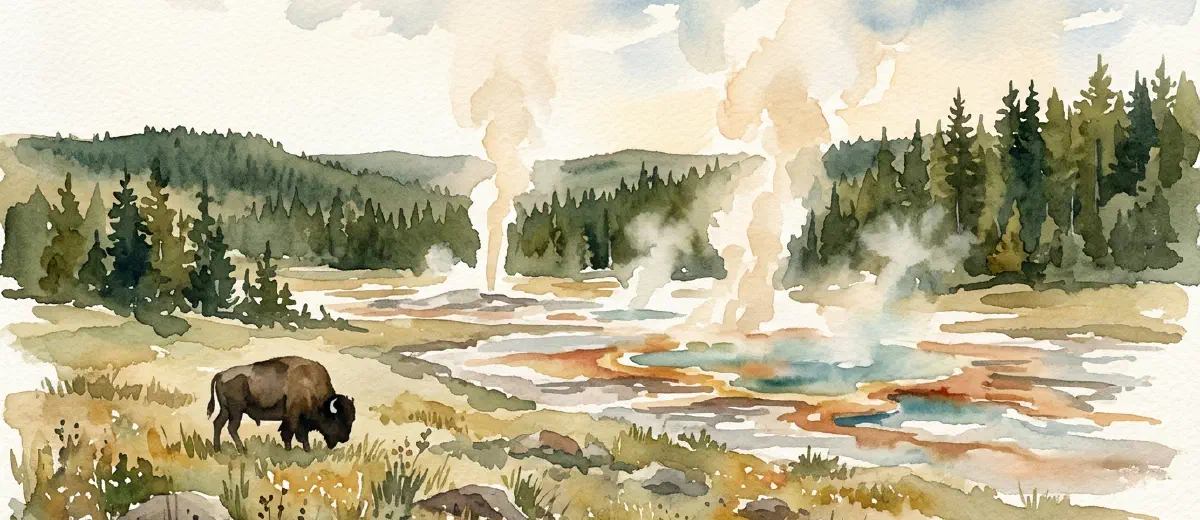
Yellowstone pulled in 4.76 million recreation visits in 2025, according to the National Park Service. May alone hit 566,363, the busiest May on record. Those people searched for fly fishing guides, rafting trips, wildlife tours, and horseback rides before they ever crossed a park boundary.
Whether your operation showed up in those searches is a different question entirely.
If you run a guide service, a rafting company, a wildlife tour outfit, or a horseback operation anywhere in the Greater Yellowstone area, this is your local SEO playbook. What to fix first, where to spend your content effort, and how to stop losing bookings to operators with worse trips but better websites.
The yellowstone search market is fragmented in your favor
Most outdoor recreation destinations have one town and a tight cluster of competitors. Yellowstone has five gateway towns across three states, each with its own set of outfitters, and most of those outfitters have websites that look like they were last updated during the Obama administration.
That works in your favor. Someone searching “fly fishing near Yellowstone” might mean the Madison River out of West Yellowstone, the Yellowstone River near Gardiner, or the Shoshone near Cody. A rafting search could mean the Gallatin Canyon, Yankee Jim Canyon, or a scenic float. Each is a different trip in a different town, and each deserves its own page on your site.
Flying Pig Adventures in Gardiner ranks well partly because they built separate pages for Yellowstone River whitewater, scenic floats, saddle-and-paddle combos, and their zipline. Montana Whitewater, which has been operating for over 30 years near Big Sky and Gardiner, does the same with distinct landing pages for each river section and trip type. Same idea both times. Specific pages for specific trips win specific searches.
Fix your google business profile first
Your Google Business Profile is the first thing most visitors see. They’re at a restaurant in West Yellowstone deciding what to do in the morning, or sitting at a campsite in the Lamar Valley with one bar of signal trying to book a float trip. The map pack is what they get.
Pick the most accurate primary category you can. “Fishing Guide Service” beats “Tour Operator.” “White Water Rafting” beats “Outdoor Recreation.” Google uses that category to decide which searches trigger your listing.
Fill out every field. Hours, service area, attributes, the 750-character description. Write that description like you’re telling someone at a trailhead what you do: “Guided fly fishing trips on the Madison, Firehole, and Yellowstone rivers out of West Yellowstone, Montana.” That is infinitely better than a vague sentence about world-class experiences.
Photos matter more than most operators think. Profiles with photos get 42% more direction requests, according to Google’s own data. Post real shots from real trips. Your guide holding a cutthroat on the Yellowstone River. Your raft running Yankee Jim Canyon. The put-in at the Gardiner bridge with Electric Peak in the background. Setting up your Google Business Profile correctly walks through the full process.
Build one page per trip, not one page for everything
The most common website mistake I see from Yellowstone-area operators is a single “trips” page that lists every offering. A fly fishing guide in West Yellowstone who mentions the Madison, Firehole, Gibbon, Yellowstone, and Gallatin rivers on one page will not rank well for any of those rivers individually.
Each trip type needs its own page. For a fishing guide, that means separate pages for Madison River float trips, Firehole walk-and-wade trips, Yellowstone Lake guided trips, and Gallatin River half-days. For a rafting company, it means distinct pages for full-day whitewater, half-day floats, and any combination packages you offer.
Each page should cover the specific river or stretch, put-in and take-out, target species or rapids, best months, what to bring, meeting location, and price. This mirrors what customers actually search before they book. Nobody types your business name into Google until they already know who you are. They type “Madison River fly fishing guided trip” or “Yellowstone River whitewater rafting July.” If that page does not exist on your site, you are not in the running.
Yellowstone Fly Fishing Co. out of Bozeman does this well, with individual pages for different river systems that include hatch information, access notes, and trip logistics. That level of detail is what Google rewards and what someone planning a trip actually wants to see.
Write content that answers pre-trip questions
People start researching a Yellowstone trip months before they arrive. The searches look like this: “best time to fly fish Yellowstone.” “What to wear rafting in Montana.” “Are Yellowstone wildlife tours worth it.” “Do I need a fishing license for Yellowstone National Park.”
Every one of those is a blog post. A fishing guide who writes about the salmonfly hatch on the Madison, covering timing, fly selection, and where to wade, proves to the reader that this guide actually knows the water. The booking page is one click away from that proof.
Seasonal content works here because the Yellowstone season has hard edges. Spring runoff on the Yellowstone River changes everything about available trips from mid-May through June. Fall in the Lamar Valley is prime time for wildlife tours when elk are bugling and wolf packs are easier to spot. A horseback riding outfit writing about fall foliage rides through the Gallatin Range captures a search that peaks every September.
You don’t need to publish daily. Twice a month keeps Google crawling your site regularly and builds a library of pages that pull in traffic over time. I have seen operators go from near-zero organic traffic to several hundred monthly visits within a year just by publishing two solid posts per month on topics their customers actually search for. What to blog about as an outdoor business has a useful framework for generating topics when you are staring at a blank screen.
Reviews separate the top three from everyone else
In the map pack, Google weighs review count and average rating heavily. Flying Pig Adventures has over 2,000 Google reviews. Many competing outfitters in Gardiner have fewer than 200. That gap shows up in search results and it shows up in booking volume.
You need a system for collecting reviews. Send a follow-up text the evening after the trip, when the guest is back at their cabin scrolling through photos. Include a direct link to your Google review page. Something like “We loved having you on the river today, if you have a minute a Google review helps other folks find us” works better than a long automated email three days later.
Respond to every review, including the bad ones. Your answer to a one-star complaint tells the next fifty potential customers more about your operation than the complaint itself. Skip the defensive posture. Google factors response rate and speed into ranking calculations too.
For the full approach, getting more Google reviews as an outdoor business covers the system from timing to wording.
Make your site work on a phone in the places people actually search
Cell service in the Greater Yellowstone area ranges from bad to nonexistent. Your potential customer might have one bar of LTE in West Yellowstone or a spotty connection at a campground near Bridge Bay. If your site takes eight seconds to load because someone uploaded twenty uncompressed photos from their DSLR, that booking goes to whoever loads next.
Trip pages need to load in under three seconds. The phone number needs to be tappable. The booking form should be visible without scrolling past a wall of hero images. Pull up your own site on your phone from the worst spot you can think of and try to book a trip. If it takes longer than a minute, fix it before you do anything else on this list.
Plan your content around yellowstone’s seasons, offset by three months
SEO does not work on the same timeline as your booking calendar. The fishing content you publish in January is the content that ranks by June. If you wait until May to write about summer trips, you are already behind.
A rough content calendar for a Yellowstone-area operator looks like this:
- October through December: publish winter content if applicable (snowmobile tours, cross-country skiing in West Yellowstone), start drafting summer trip pages, update GBP with off-season hours
- January through March: publish summer trip pages, “best time to visit” posts, gear and preparation guides, refresh photos on your Google Business Profile
- April through June: shoulder-season content, spring runoff fishing alternatives, trail and road condition updates, start collecting reviews from early-season guests
- July through September: keep publishing lightweight (trip reports, conditions updates, fall previews), focus energy on delivering trips and asking for reviews
The operators who rank in Yellowstone search results are not the ones with the biggest ad budgets. They are the ones who treat their website like a year-round job, not a thing they update once the season is already underway. Nearly five million people visited this park last year. They all typed something into a search bar before they showed up. Whether your name was in those results is up to you.