Marketing outdoor activities in Sedona, AZ: local SEO playbook for operators
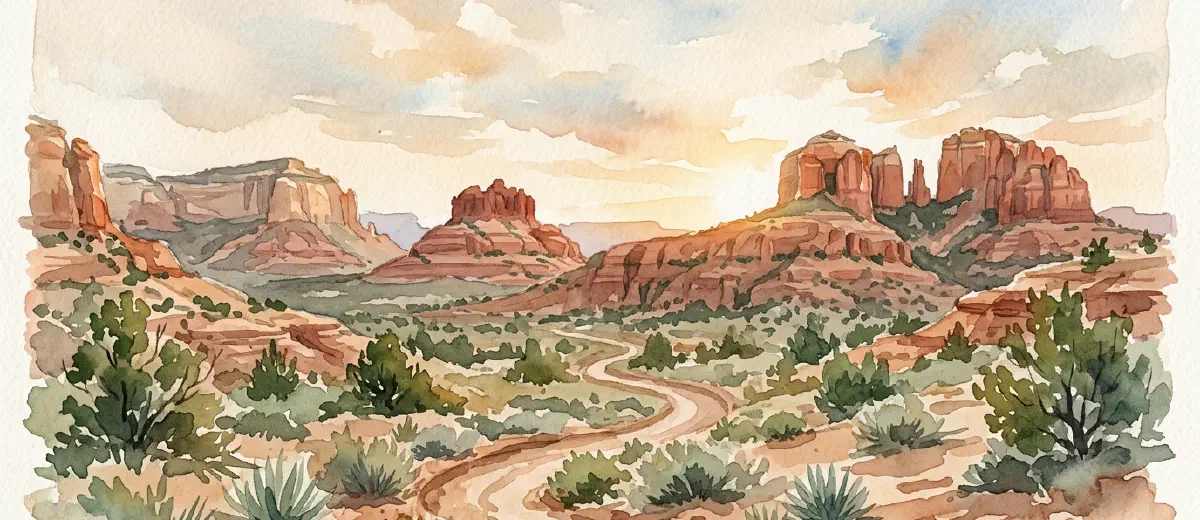
Sedona draws roughly 3 million visits per year and generates over $1 billion in tourism revenue, according to the City of Sedona Tourism Program. That sounds like a lot of potential customers for your ATV tour, guided hike, balloon ride, or horseback outing. The problem is that most of those visitors decide what to do before they arrive, and they decide by searching Google.
If your business does not show up when someone types “Sedona ATV tours” or “horseback riding Sedona AZ” into their phone, you lose that booking to whoever does. Probably Pink Jeep Tours. Probably Viator. This playbook walks you through the local SEO moves that give smaller Sedona operators a real shot at capturing that search traffic on their own terms.
Claim and finish your google business profile
Your Google Business Profile is the single most visible piece of real estate you control in local search. When someone searches “hot air balloon Sedona” from a hotel room in the Verde Valley, the map pack that appears above the organic results pulls directly from GBP listings.
We have looked at dozens of Sedona operator profiles, and a surprising number are half-finished. Missing hours, one or two photos, no posts since 2023. That is free money left on the ground.
A complete profile for an outdoor operator looks like this:
- Primary category set to your exact activity (e.g., “ATV Tour Agency” not just “Tour Operator”). Secondary categories for related services.
- Business description that includes your location, the activity, and one or two trails or landmarks you visit. Northern Light Balloon Expeditions, for example, could reference sunrise flights over Cathedral Rock and the Coconino National Forest.
- At least 25 photos, refreshed quarterly. Real shots from your tours outperform stock images every time.
- Posts published weekly or biweekly during peak season (March through May, September through November).
- Q&A section seeded with the five questions your front desk hears most often.
If you have not touched your profile in a while, start there. The payoff is fast. For a full setup walkthrough, see our Google Business Profile guide for outfitters.
Build pages around the activities people actually search for
Most Sedona tour operators run a single homepage that lists everything they offer. That is a problem because Google ranks pages, not websites. If you want to show up for “Sedona horseback riding” and “Sedona jeep tours,” you need separate pages targeting each phrase.
Each activity page should include the specific trip name, duration, what the guest will see (Bell Rock, Soldier Pass, the Verde River, whatever your route covers), pricing, and a way to book. You are not stuffing keywords here. You are answering the exact question someone typed into Google.
Trail Horse Adventure, based about 20 minutes outside Sedona, does this reasonably well. Their site describes routes through the Verde Valley and mentions Tuzigoot ruins and river crossings. Google can tell what the page is about. So can the person reading it.
For a deeper look at structuring these pages, this guide to trip pages that rank covers the format that works.
Get serious about reviews
Sedona Jeep Tours has over 7,500 reviews across TripAdvisor and Google. That review count is a moat. It tells searchers the company is legit, and it tells Google the same thing.
You do not need 7,500 reviews to compete, but you do need a steady stream of new ones. A review from six months ago carries less weight than one from last week, both in the algorithm and in the mind of someone comparing two operators on their phone screen.
The operators doing this well have a system. They send a text or email within 24 hours of the trip with a direct link to their Google review page. Some hand out a card with a QR code at the end of the ride. Honestly, the method matters less than doing it every single time.
Respond to every review, including the negative ones. A calm, specific response to a one-star review often does more to build trust than the five-star reviews surrounding it. We wrote a full breakdown of how reviews affect your local ranking.
Target the seasonal search cycle
Search demand for Sedona outdoor activities is not flat. It peaks hard in March through May and again in September through November, then drops during the brutal summer months when visitor counts fall off noticeably. If you publish a page about “fall hiking in Sedona” in October, you are already too late. Google needs weeks or months to index and rank new content.
Plan your content calendar around where the traffic will be, not where it is now. Publish spring-focused trip pages in January. Get your fall content live by July at the latest. That lead time lets Google crawl, index, and start ranking your pages before the demand arrives. Horsin’ Around Adventures, for instance, could publish a page about fall horseback rides through Sedona’s wine country in midsummer and have it ranking before the October crowds show up.
SEO lead time matters more for seasonal businesses than almost any other factor. If you wait until peak season to start publishing, you will spend the whole season watching competitors collect the traffic you wanted.
Create content that answers what visitors search before they book
People planning a Sedona trip do not just search for “ATV tours Sedona.” They search for things like “is Cathedral Rock hike hard,” “best time to visit Sedona for hiking,” and “what to wear on a Sedona jeep tour.” Those are people still in the research phase. If your site answers those questions, you are the operator they remember when they pull out a credit card.
A blog post about the difficulty levels of Sedona’s most popular trails, written by someone who actually guides those hikes, will outperform a generic travel article from a content mill. You know that the Cathedral Rock trail gets slippery after rain and that Devil’s Bridge parking fills up by 8 a.m. on weekends. That is the kind of detail Google’s E-E-A-T guidelines reward, and you have more of it than any travel blogger passing through town for a long weekend.
You do not need to publish daily. One solid post per week during shoulder season, covering real questions your customers ask, will put you ahead of most competitors in the Sedona market. The guide to what customers Google before booking can help you build that list.
Make sure your site works on a phone
Over 60 percent of local searches happen on mobile devices. For Sedona tourists searching from hotel lobbies, rental cars, and trailhead parking lots, that number is probably higher. If your site loads slowly, displays poorly, or makes it hard to tap a “Book Now” button on a phone screen, you are losing people who were ready to pay.
Run your homepage and your top activity page through Google PageSpeed Insights. If your mobile score is below 70, you have work to do. Common problems for outdoor operators include oversized hero images (that beautiful red rock panorama might be a 4MB file), too many third-party scripts from booking widgets, and no image compression.
This is not just a user experience problem. Google uses page speed as a ranking factor, and slow mobile pages get pushed down in local results. The visitors searching on their phones in Sedona are some of your highest-intent prospects. They are standing in the hotel parking lot deciding between your tour and the one down the road. A site that loads in under three seconds keeps them on the page. A site that takes eight seconds sends them to whoever loads next.
Keep your directory listings clean
Sedona has a web of local directories and aggregators: VisitSedona.com, AllSedona.com, Sedona.net, the Sedona Chamber of Commerce, and of course Viator and TripAdvisor. Your business information needs to be accurate and consistent across all of them. Mismatched phone numbers, old addresses, or a business name that varies between listings will hurt your local ranking.
This consistency of name, address, and phone number across the web is called NAP consistency. It is boring to maintain and it matters more than most operators think. Go through your top 10 directory listings once a quarter and make sure everything matches exactly. Being listed on VisitSedona.com and the Chamber site also earns you backlinks from high-authority local domains, which is the kind of signal Google pays attention to when deciding who deserves that top-three map pack spot.
If you have been relying on word of mouth, Viator listings, or a website that has not changed since 2021, the gap between you and the operators capturing search traffic is widening. None of the moves in this playbook are hard. They just take follow-through. Start with your Google Business Profile, build out individual activity pages, publish content that answers real questions, fix your mobile speed, and keep these directory listings accurate. Every month you wait, those operators pull further ahead in the results.


