Lodge and guest ranch marketing: content that fills rooms
Guest ranches and lodges have a marketing challenge that single-activity outfitters don’t. You’re not just selling one thing. A guest ranch in Montana might offer horseback riding, fly fishing, hiking, cattle work, and kids’ programs, all wrapped up in a multi-night stay. A fishing lodge in Idaho sells guided trips, but also the accommodations, the meals, and the full experience of being somewhere remote and beautiful.
That breadth is your strength as a business. But it’s a headache for SEO, because Google doesn’t rank “everything at once.” It ranks individual pages for individual queries. A guest ranch lodge marketing SEO strategy needs to account for that by creating content that ranks for each activity you offer while tying it all back to one property and one booking.
Here’s how to build a content strategy that fills rooms instead of just generating page views.
The multi-activity keyword challenge
When someone searches “dude ranch Wyoming,” they’re looking for the full package. But when someone searches “fly fishing lodge Yellowstone area” or “horseback riding vacation Colorado,” they want something specific. Your ranch might be the perfect answer to all three queries, but only if you have separate pages targeting each one.
This is where most lodge websites fall short. They have a single “Activities” page that lists everything in a few bullet points. That page won’t rank for any specific activity search because it’s not deep enough on any single topic. Google will choose the competitor who has a dedicated 800-word page about their guided fly fishing program over your 50-word mention in a list.
The fix: build a dedicated page for every major activity you offer. “Fly fishing at [Ranch Name]” gets its own page. “Horseback riding at [Ranch Name]” gets its own page. “Guided hiking from [Ranch Name]” gets its own page. Each one targets the relevant keywords, describes the experience in detail, and links to your booking or inquiry page.
For a ranch in the Gallatin Valley, that might look like:
- “Fly fishing the Gallatin River: guided trips from [Ranch Name]”
- “Horseback riding in the Gallatin Range: trail rides and cattle drives”
- “Hiking near Yellowstone: guided day hikes from our lodge”
Three pages, three keyword targets, three chances to show up in search results. One “Activities” page gives you one chance at best.
Content that sells the experience, not just the activity
Lodges and guest ranches aren’t competing with day-trip outfitters. You’re selling a multi-day experience. Your content should reflect that.
Trip guides work differently for lodges than for day-trip operators. Instead of “what to expect on a half-day float,” you’re writing “what a week at a Montana guest ranch actually looks like.” That’s a different kind of content. More narrative, more atmospheric, more focused on the full picture of what someone’s vacation will feel like.
Specific content types that work well for lodges and ranches:
Day-by-day or sample itinerary posts. “A 5-night stay at [Ranch Name]: what your week looks like.” Walk a potential guest through a typical visit. Morning ride, afternoon fishing, evening cookout. These posts answer the unspoken question every prospect has: what will I actually be doing all day?
Seasonal experience pages. What’s the ranch like in June versus September? Spring calving season looks completely different from fall hunting season. A best-time-to-visit page is valuable for any outdoor business, but for a lodge it’s essential because guests are committing to multiple nights and want to pick the right window. “Best time to visit a guest ranch in Wyoming” gets searched more than you’d think.
Guest stories and trip recaps. A family’s first ranch vacation. A group of college friends on a fishing trip. A couple’s anniversary week. These posts are evergreen content that builds trust, adds personality, and targets long-tail searches like “guest ranch experience family with kids” or “what’s it like to stay at a fishing lodge.”
Area and destination guides. Your guests are choosing a region, not just a property. “Things to do near Big Sky Montana,” “Planning a trip to the Henry’s Fork area,” or “Why the Sawtooth Valley is Idaho’s best-kept secret.” These pages capture people researching the destination and position your lodge as the local authority.
Accommodation content most lodges skip
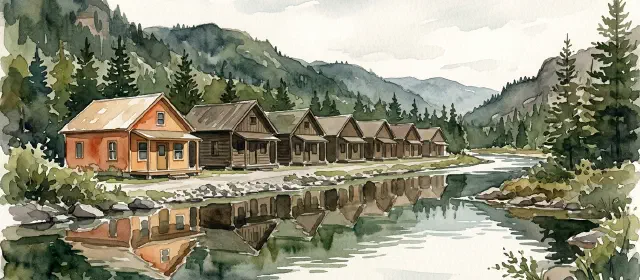
Here’s something hotels know that many ranches and lodges overlook: people search for lodging specifics. “Cabins near Yellowstone,” “guest ranch with private cabins,” “lodge rooms with river views.” If your property has different room or cabin types, each one deserves a page (or at least a detailed section) with photos, descriptions, and what makes it different.
A fishing lodge on the South Fork of the Snake River with four cabin types should have four distinct descriptions, not one paragraph that says “comfortable cabins with all the amenities.” Show the actual cabin. Mention the porch that overlooks the river. Note that Cabin 3 is closest to the water and fills up first. This specificity converts. It also ranks for the long-tail accommodation searches that generic lodge pages miss entirely.
Reducing your dependence on directories
Guest ranches historically rely on directory listings: DudeRanchers.com, RanchWeb, Orvis-endorsed lodge programs, OTA platforms like TripAdvisor Experiences. Those directories have their place, but every booking through a third party costs you margin and puts someone else’s brand between you and your guest.
Content is how you build a direct booking channel. When your own site ranks for “fly fishing lodge near Yellowstone” or “best guest ranch in Colorado for families,” that traffic comes to you with no commission attached. Every blog post, every activity page, every area guide you publish is another path for a potential guest to find your property directly.
This doesn’t happen overnight. It takes a year of consistent publishing to build meaningful organic traffic. But once those pages rank, they keep working. Season after season, no ad spend required.
Start with what makes you different
Every guest ranch has horseback riding. Not every guest ranch has a private stretch of blue-ribbon trout water, or a working cattle operation guests can join, or a naturalist-guided wildlife program. Your content strategy should lead with whatever makes your property distinct.
Write that page first. Make it the best, most detailed, most visually rich page on the internet for that specific experience at that specific location. Then build outward: activity pages, seasonal guides, area content, guest stories. Decide what to blog about based on what your guests ask before they book and what they rave about after they leave.
The ranches and lodges that fill rooms year after year aren’t necessarily the ones with the biggest ad budgets. They’re the ones whose websites give potential guests enough information, enough specificity, and enough feel for the experience that booking becomes the obvious next step.