Local SEO for treehouse and unique lodging: how to dominate Google Maps in your area
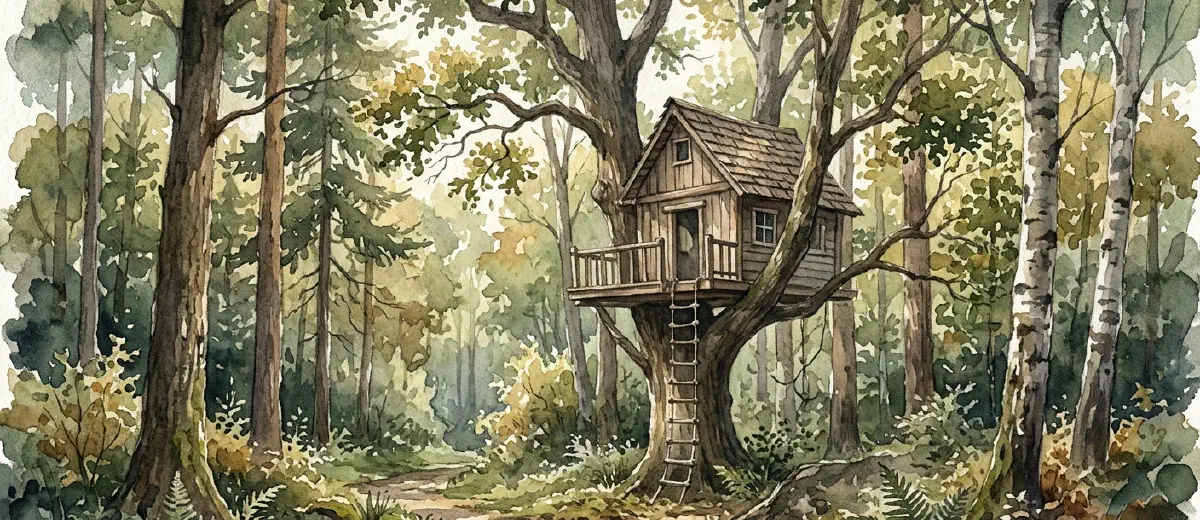
Someone is sitting in their car at a rest stop three hours from your property, searching “treehouse rental near me” on their phone. Google shows a map pack with three options. If you’re in those three, you get clicked. If you’re not, you don’t exist to that person.
That plays out across every region where unique lodging operators are clustered. Treehouse rentals, yurts, tiny cabins, geodesic domes - these properties get shared on Instagram and pinned on travel boards, but social reach doesn’t automatically translate to local search visibility. The people who find you through a viral post are a fraction of the people who could find you by searching. Local SEO is the part that captures the rest.
Why unique lodging needs local seo differently
Most local SEO advice is written for restaurants and plumbers. Your situation is different in ways that actually matter.
For one thing, you’re likely more rural than most local businesses. Your address might be a county road number that Google’s geocoder struggles with. Your nearest town might be fifteen miles away. Physical proximity to searchers is a disadvantage you can’t change, so you compensate with stronger relevance and prominence signals.
Travelers looking for a treehouse or glamping experience also tend to search across a region, not just “near me.” Someone planning a weekend trip from a city doesn’t search “treehouse 0.3 miles from me.” They search “treehouse rental Smoky Mountains” or “treehouse cabin Blue Ridge.” Your local SEO has to work for both searches: true nearby queries from travelers already in the area, and destination searches from people still planning.
Your Google Business Profile category probably doesn’t match exactly what you offer, either. Google’s category list was built for mainstream businesses. “Vacation home rental agency” and “rural lodging” and “resort” all exist, but none of them quite captures “treehouse in the woods.” Getting category and description right takes some thought.
Claim and configure your google business profile
Your Google Business Profile is the primary driver of your map pack ranking. Get this right before anything else.
Use the address where the property actually is, not a P.O. box or the nearest town. If Google can’t geocode your road properly, correct the pin placement manually through the GBP dashboard. An incorrect pin is one of the most common and easiest-to-fix problems for rural operators.
For your primary category, pick the closest match to what you are. “Vacation home rental agency” works for a standalone operator. “Resort” can work if you have multiple units or amenities. Add secondary categories for activities guests have access to, whether that’s fishing, hiking, or kayaking. Secondary categories help you surface for searches that aren’t purely about lodging.
Your business description gets 750 characters. Use them to be specific: where you are relative to recognizable towns and landmarks, what the accommodations are actually like, and what someone is booking when they book you. “Two treehouse cabins overlooking a private trout pond in the Ozarks, twenty minutes from Bentonville” does more for you than “experience the magic of nature in our beautiful treehouses.” One tells Google where you are and what you offer. The other could describe anything.
Set seasonal hours if your property has them. A profile that looks closed loses to one that looks active.
Photos are doing more work than you realize
Unique lodging lives or dies on visual appeal. People booking a treehouse are buying an experience that starts in their imagination, and your photos are how that imagination forms before they ever reach your website.
Profiles with more photos get more clicks. Profiles with photos added recently rank better than those with the same eight images from three years ago. Google sees photo activity as a sign that the business is still operating.
What works: exterior shots in different seasons and light, interior photos that show the actual scale and detail of the space, shots of the surrounding landscape, and any notable features like a wood stove, outdoor shower, or fire pit. Photos with guests in them perform better than empty rooms, as long as you have permission and faces aren’t the focus.
Upload at least 15 photos when you first claim your profile. Then add a few more each season. It takes maybe thirty minutes and signals to Google that someone is actively maintaining the listing.
Reviews move your ranking more than most operators expect
Review count and recency are among the most reliable ranking signals in the Google Maps algorithm. A treehouse rental with 85 reviews and a 4.8 rating will almost always outrank one with 12 reviews and a 5.0, even if the other property is physically closer to the searcher.
Building a review system is mostly logistics. After checkout, send a text or email while the stay is still fresh - “Thanks for staying. If you had a good time, a Google review really helps. Here’s a direct link.” That direct link matters more than most operators realize. Every extra click between your ask and the review form loses some percentage of the people who would have done it. Get your direct review link from your GBP dashboard and put it in every follow-up.
The off-season is the right time to respond to reviews you missed during the busy months and set up any automated post-checkout tools before the next season opens. Responding to reviews signals to Google that the business is active, and it signals the same thing to potential guests reading them.
Don’t review-gate. Don’t offer anything in exchange for a review. Google’s detection has gotten better, and a flagged profile is harder to recover than one that simply grew slowly.
Get your name, address, and phone number consistent
This is the least interesting part of local SEO and one of the most common sources of ranking drag for small operators.
Your business name, address, and phone number need to match exactly everywhere they appear online. Your GBP, your website, Yelp, TripAdvisor, Hipcamp, Airbnb (if you list there), your state’s tourism site, any press coverage your property has received. “Ridgeline Treehouse” and “The Ridgeline Treehouse” and “Ridgeline Treehouse Cabins” are three different entities to Google. Pick one version and use it everywhere.
Rural addresses make this messier than it sounds. Your address might be formatted differently on Google Maps versus USPS, and your website might use a third version. Do a manual check of your top listings and fix the gaps. One afternoon, done.
NAP consistency applies everywhere your property has ever been mentioned, not just the obvious directories. A regional travel blog that wrote about you two years ago is a citation. If the name doesn’t match, it either contributes nothing or actively confuses Google about whether these listings describe the same place.
Build location pages on your website
Your GBP gets you into the map pack, but your website is what reinforces the ranking signals and captures the people who want more than a listing before they commit.
You need at least one page that targets the geographic queries travelers actually use. If you’re a treehouse rental in the Catskills, you want a page that uses “treehouse rental Catskills” and mentions the nearest towns, the surrounding terrain, and how far you are from the reference points travelers use when planning. The page doesn’t need to be long, but it needs to be specific. Generic copy that could describe any wooded property in any state doesn’t help Google connect your listing to location-based searches.
If you have multiple units, each can have its own page. A dedicated page for “Hemlock Hollow” cabin is more useful to a guest comparing options than a one-paragraph mention on a page that lists all four properties.
Area guides and hiking or paddling posts pull people searching for activities in your region and drop them on a site that happens to have a treehouse they can rent. Trip guides that rank are one of the more reliable ways to generate organic traffic that converts into lodging bookings. The connection feels natural to readers and to Google.
Citations and directory listings for unique lodging
Unique lodging operators have a specific set of directories that matter more than the generic business citation sites.
Hipcamp, Glamping Hub, and Tentrr are the ones specific to this category. TripAdvisor and Yelp still matter broadly. Your state tourism board and regional visitor bureau usually have lodging directories you can submit to. If your property ties into outdoor activities, association directories for those sports can be worth a listing.
Get listed on the relevant ones, and fill them out completely. Name, address, phone number matching your GBP exactly. Photos. A description with actual location details. A half-completed Hipcamp profile generates less than a complete one, both in search signals and in bookings.
You don’t need to be in every directory. The ones that matter are the ones travelers in your category actually use and the ones Google recognizes as credible sources for this niche. A few strong citations in the right places are worth more than thirty thin ones.
The local seo timeline for seasonal operators
Local SEO has a lag. Changes you make to your GBP and website today take weeks or months to show their full effect in rankings.
This is a problem if you wait until your busy season is already in motion. If you run bookings from May through October, the work you do in January shows up in rankings by April. Waiting until guests start calling means you’re optimizing for next year, not this one.
The treehouse rentals and glamping operators ranking well in the map pack every spring did the work during the prior winter. The off-season is when you claim the profile, clean up the citations, build out the location pages, and set up the review follow-up. None of it is complicated. Most of it is just sitting down and doing it before you need it to work.


