Local SEO for outdoor yoga / wellness retreat: dominating Google Maps in your area
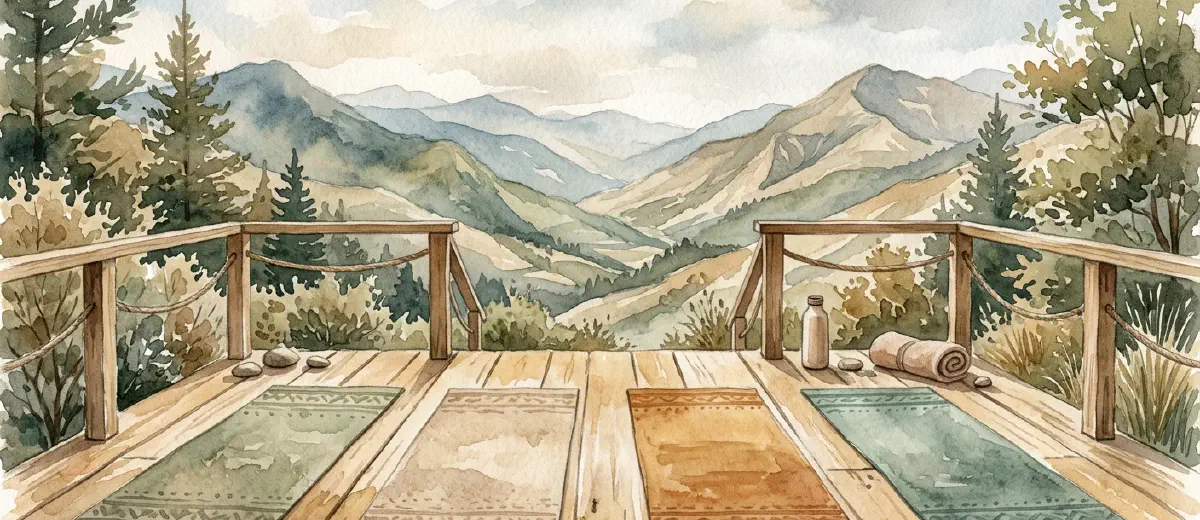
Someone searches “outdoor yoga near me” on a Sunday morning. They’ve already decided they want to go outside and move their body. They’re not comparing wellness philosophies or reading essays about chakras. They’re looking at three results in the map pack, picking one, and booking within the next ten minutes.
If your outdoor yoga or wellness retreat isn’t in that map pack, someone else gets the booking. For most outdoor wellness operators, the gap between where they rank and where they could rank is almost entirely explained by things they haven’t done yet, not by some algorithmic mystery.
Wellness tourism has been growing fast, and the search behavior around it skews heavily local. “Outdoor yoga Sedona,” “forest bathing retreat near me,” “sunrise yoga on the beach [city].” These are the searches you need to show up for. The competition in most markets is thinner than you’d expect. Most small wellness operators are running on Instagram and word-of-mouth and treating Google like an afterthought.
What google actually uses to rank you locally
Google has published its local ranking factors openly: relevance, distance, and prominence.
Distance is the only one you can’t change. Your studio, outdoor space, or retreat property is where it is. The other two you can actually work on.
Relevance means Google is confident that your business matches what someone searched for. This comes from your Google Business Profile category, your profile description, the text on your website, and how well all of those align with each other. An outdoor yoga teacher who lists their primary category as “yoga studio” without any mention of outdoor or nature-based formats is going to miss searches for “outdoor yoga near me.” Google doesn’t assume. It matches signals.
Prominence is how well-known and trusted Google thinks you are. Reviews, citations across the web, links to your site, mentions in local publications: all of it feeds this score. A retreat center with 80 Google reviews and listings on the major wellness directories is going to outrank a competitor with 15 reviews and no presence beyond their own website, even if the competitor is geographically closer.
Set up your google business profile properly
Your Google Business Profile controls whether you appear in local search at all. If you haven’t claimed yours yet, search your business name in Google Maps first. There’s a reasonable chance a partial listing already exists, pulled from public directory data. Claim that one instead of creating a new one, or you’ll end up with two listings undercutting each other.
Primary category is where most wellness operators make the first mistake. Search Google’s available categories carefully. “Yoga studio” exists, but so do “wellness center,” “retreat center,” “meditation center,” and “holistic medicine practitioner.” Pick the one that most closely matches your main offering. If you run outdoor yoga classes, “yoga studio” is usually the right primary choice. The secondary categories are where you add everything else that fits: wellness program, spa, meditation center, nature reserve if that applies.
Your business description gets 750 characters. Use them. “Outdoor yoga and wellness retreats in the [specific area] serving [nearest major city] and surrounding communities” does meaningful work. “A welcoming space for your wellness journey” does almost nothing. Include what you actually offer, where you are, and the names of the specific places you serve.
Fill in every section. Hours, phone number, website, booking link if you take reservations directly. Walk through the attributes and check everything that applies. If you offer classes outside, if you’re pet-friendly, if you have parking, if you serve food: all of it shows up in filters and search refinements. Missing attributes mean missing from filtered searches.
Reviews matter more than most people realize
Review volume and recency are the second-largest factor in local pack rankings. More reviews means higher ranking, assuming your average rating stays reasonable. The recency part matters too. A business with 90 reviews from the past year is going to outrank one with 30 reviews from three years ago.
Wellness experiences generate reviews easily when you ask. Your students just spent an hour breathing fresh air, moving their bodies, and feeling good. That’s exactly the emotional state where people want to share something. Most of them won’t think to do it without a prompt.
Ask at the end of class or the end of a retreat day, verbally, directly. “If today was useful for you, a quick Google review helps other people find us.” That’s it. Back it up with a text message to people who gave you a number at booking. Response rates from in-person asks are higher than any email campaign you’ll run.
Building a review process you run consistently after every session is worth more than any one-time push. You want a steady trickle, not periodic spikes.
Respond to every review. A few seconds per response. “So glad you found the sunrise class, hope to see you again soon” tells Google that a real person is managing this profile actively. Respond to the negative ones too, without being defensive.
Get your name, address, and phone consistent everywhere
Your business name, address, and phone number need to be identical wherever they appear online. Your GBP, your website, Yelp, Mindbody, ClassPass, local tourism directories, your state tourism board listing, any wellness publications that have mentioned you. Exactly the same format everywhere.
A business listed as “Mountain Flow Yoga” on GBP, “Mountain Flow Yoga & Wellness” on ClassPass, and “Mountain Flow LLC” on the county business directory is giving Google three different businesses to try to reconcile. It doesn’t tank your ranking overnight. It just quietly costs you ground over time. NAP inconsistency is one of the most common invisible drags on local rankings.
For wellness and outdoor recreation operators, there are citation sources worth targeting beyond the generic directories. Mindbody and ClassPass both carry real authority and are exactly the kind of platform Google expects wellness businesses to appear on. State tourism boards, local CVBs, outdoor recreation directories, and wellness travel publications that cover your region are all worth pursuing. A mention from a local hiking or outdoor publication that links back to your site is worth more than three generic directory listings.
Build pages on your website that match what your profile says
Google compares your GBP to your website. When both say the same things about what you do and where you are, Google’s ranking confidence goes up. When they diverge, you lose ground you didn’t need to lose.
Build a dedicated page for each format you offer. An outdoor yoga page. A forest bathing retreat page. A weekend wellness retreat page. Each one should include your location, the specific area you serve, and concrete description of the experience. “Sunrise yoga on the bluffs above Lake Tahoe with views of the Sierra Nevada” gives Google far more to match against search queries than “a peaceful outdoor wellness experience.”
Include your address as readable text on your website, not just in a graphic or embedded in a contact form only. Put your phone number as text. Embed a Google Map on your contact or location page. These are basic signals that help Google confirm your physical location and connect your website to your GBP.
If your classes happen at different locations, whether a park, a beach, a private estate, or a retreat center, list those locations specifically in your content. Someone searching “beach yoga [your city]” needs to find language about beach yoga on your site, not just “outdoor classes in various locations.”
The keyword patterns that drive bookings for location-based outdoor activities follow a predictable structure, and wellness is no different. “Outdoor yoga [city],” “[activity] retreat near me,” “nature wellness [region]”: build pages around these combinations and make sure your GBP reinforces each one.
Keep your profile active through the season
Most wellness operators claim their GBP when they launch, post twice, then forget it exists.
Google uses profile activity as a signal. A post announcing your spring retreat schedule, a photo from a morning class, an update when you add a new format: these take a few minutes each. Active profiles rank higher than dormant ones when everything else is roughly equal.
Add photos on a rolling basis throughout your season. Real photos from your actual classes: people on mats at sunrise, the view from your outdoor space, your retreat location in different weather and light. Not stock imagery. Google tracks photo recency, and listings with recent real images consistently outperform those running the same shots from two years ago.
Outdoor wellness has compressed booking windows, particularly for retreats. Most of your annual retreat search traffic happens in the eight to twelve weeks before your season. If you’re updating your website and GBP in the middle of that window expecting to rank in time, you’re probably too late. Search engines need time to process changes before they show up in results. The practical rule is to have your pages updated, your GBP current, and your review momentum active at least 60 to 90 days before your peak booking period.
The opportunity most local wellness operators miss
Most outdoor yoga and wellness retreat operators have an incomplete GBP with a generic category, a handful of old reviews, and a website that never mentions their city or region by name. A few have a Mindbody and ClassPass presence but haven’t connected any of it to how they show up in Google.
You don’t need a sophisticated marketing operation to beat them. You need a complete GBP with the right primary category, a website that names where you actually are, and a consistent process for collecting reviews after people have a good experience with you.
Citation building during your off-season, when you have time, pays off when search volume peaks. The directories won’t chase you. A few hours getting listed on the right platforms before your busy season can show up in how often you appear when someone nearby is looking for exactly what you offer.
Most of your local competitors haven’t done this. That’s the opening.


