How to show up in Google Maps when someone searches "rafting near me"
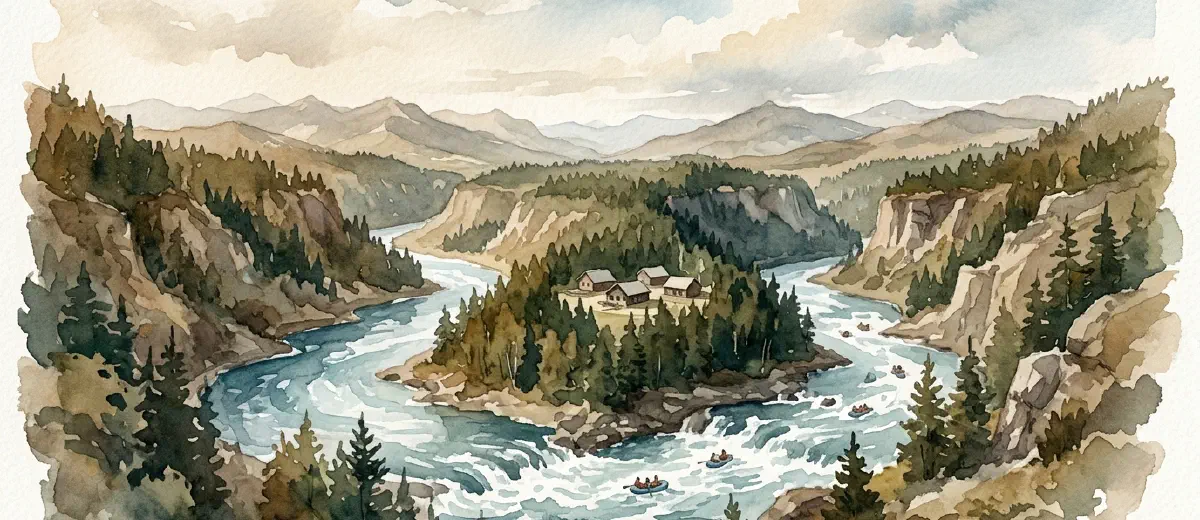
Someone standing in Buena Vista, Colorado types “rafting near me” into their phone. Google shows three businesses in the map pack. Yours isn’t one of them. That person books with your competitor, probably within the next hour.
Google Maps ranking for outdoor activities is one of the highest-leverage things you can work on as an outfitter, guide service, or gear shop. “Near me” searches are about as close to a guaranteed booking as organic search gets. The person has already decided what they want to do, and they’re looking for who can do it right now. Over 80% of these searches happen on mobile, and a huge share of them lead to a visit or booking within 24 hours.
So how does Google decide which three businesses show up in that map pack?
The three things Google cares about
Google has been pretty open about this. Local pack rankings come down to three factors: relevance, distance, and prominence.
Relevance is whether your business matches what the person searched for. If someone searches “kayak rental near me” and your Google Business Profile lists you as a “tour operator” with no mention of kayaks, Google doesn’t know you’re a match. Your primary category, your business description, and the content on your website all feed relevance signals.
Distance is the simplest one: how far your business is from the person searching. You can’t change your physical location, but you can make sure Google has the right address and that your service area is properly defined. For businesses with multiple launch points or locations, this matters a lot (more on that below).
Prominence is Google’s way of measuring how well-known and trusted your business is. This is where reviews, citations, website authority, and your overall online presence come in. A rafting company with 340 Google reviews and mentions across TripAdvisor, Yelp, and the local tourism board’s website is going to outrank a competitor with 12 reviews and no citations, even if the competitor is closer to the searcher.
Get your Google Business Profile right
Your GBP is the single biggest factor in local pack rankings. It accounts for roughly a third of the ranking signals Google uses for Maps results.
Start with your primary category. This needs to be as specific as possible. “Rafting” is better than “tour operator.” “Kayak rental service” is better than “outdoor recreation.” Google offers surprisingly specific categories, so search for yours before settling on a generic one. You can add secondary categories too. A rafting company that also does kayak rentals and SUP should list all three.
Fill out every field. Business hours matter more than people realize; Google is more likely to show businesses that are currently open when someone searches. Your business description should include the activities you offer and the area you serve, written naturally. “Half-day and full-day whitewater rafting trips on the Arkansas River departing from Buena Vista and Salida, Colorado” tells Google exactly what you do and where.
Add photos regularly. Not stock photos. Actual photos from your trips. Google tracks how often your profile is updated with fresh content, and businesses that post photos monthly tend to rank higher than those with the same eight photos from three years ago.
Reviews are your biggest competitive lever
Review count, review quality, and how recently you’ve gotten reviews are all prominent ranking signals. If your competitor has 200 reviews and you have 40, that gap is hurting you in the local pack regardless of how well the rest of your profile is optimized.
The fix is simple but requires consistency. Ask every customer for a review after their trip. A follow-up text or email with a direct link to your Google review page converts well because the experience is fresh. Some outfitters hand out a card at the take-out point with a QR code. Whatever method works for your operation, the key is making it routine rather than occasional.
Respond to every review, positive and negative. Google has confirmed that review responses are a ranking factor. Keep responses genuine. A sentence or two thanking someone for coming out works. You don’t need a paragraph.
Watch for review recency too. A business that got 100 reviews in 2024 and nothing since looks stale compared to one that gets five new reviews a month. Google weighs recent reviews more heavily.
Fix your citations and NAP consistency
Your NAP (name, address, phone number) needs to be identical everywhere it appears online. Your website, your GBP, Yelp, TripAdvisor, your local chamber of commerce listing, any outdoor recreation directories you’re listed on. If your GBP says “Arkansas Valley Adventures” and Yelp says “Arkansas Valley Adventures LLC” and your website says “AVA Rafting,” Google isn’t sure these are all the same business.
Do a manual check of your top 10 listings, or use a free tool like Moz Local to scan for inconsistencies. This is tedious work, but it’s a one-time fix that keeps paying off.
For outdoor businesses specifically, make sure you’re listed on the directories that matter for your niche. Your state’s tourism board, local visitor bureaus, and activity-specific directories like the ones maintained by outfitter associations carry more weight than generic business directories.
Multi-location operators: you need a profile for each location
This is where a lot of outfitters and rental shops leave rankings on the table. If you run rafting trips out of both Buena Vista and Canon City, those are two different locations serving different “near me” searches. Each one should have its own Google Business Profile with its own address, phone number, and photos.
Same goes for gear shops with multiple storefronts, or guide services with separate put-in points. Each location deserves its own page on your website too, with content specific to that area. A landing page for “rafting in Canon City” and a separate one for “rafting in Buena Vista” helps Google connect each GBP to the right local content.
Don’t create profiles for locations where you don’t have a physical presence. Google penalizes fake listings, and it’s not worth the risk.
Build local content on your website
Your GBP gets you into the map pack, but your website reinforces the ranking signals. Google cross-references your profile against your site content to confirm relevance.
Build pages for each activity and location combination you serve. “Fly fishing trips in Bozeman” and “fly fishing trips on the Madison River” are different searches with different intent. A well-built things-to-do page for your area can capture dozens of “near me” and location-based queries with a single piece of content.
Include your address and service area on your site. Not buried in the footer, but on your contact page and ideally on your location-specific pages. Embed a Google Map on your contact page. These are small signals, but they add up.
Most of your competitors aren’t doing this
That’s the real opportunity. The average outdoor recreation business has a half-filled GBP, inconsistent NAP info across the web, and hasn’t asked for a review since last season. The local pack in most outdoor markets has room for a business that puts in even moderate effort on local SEO.
Start with your GBP. Get your categories right, your hours updated, and your description filled out. Then build a review collection habit. Those two things alone will move you up in Maps results for the “near me” searches that are most likely to put someone in your boat, on your bike, or in your shop.