How to get more Google reviews for your outdoor business (without being pushy)
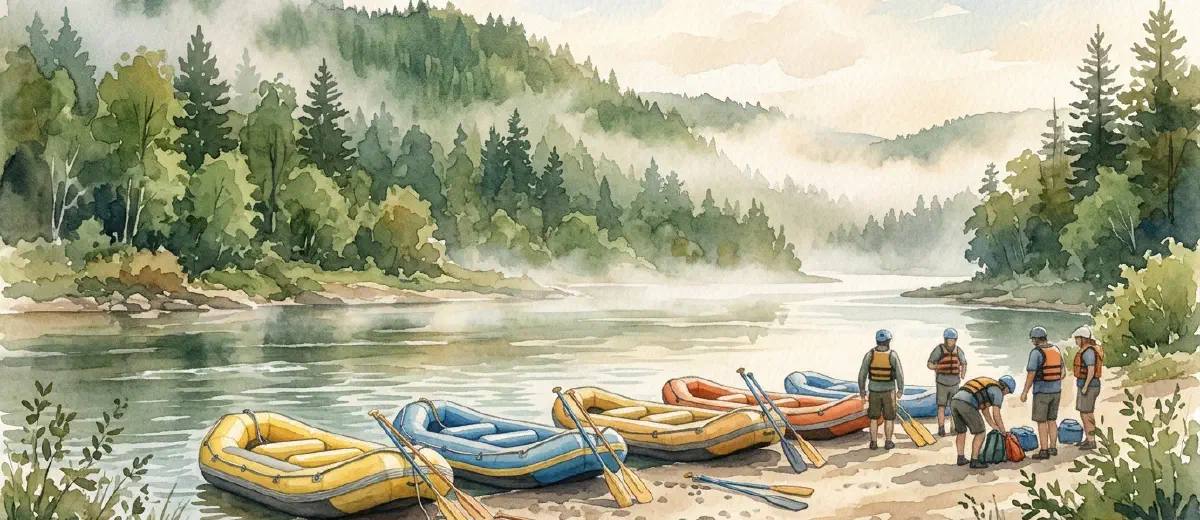
You know reviews matter. You see your competitors with 300+ Google reviews and wonder how they got there. But asking guests for reviews feels awkward, especially when you just spent the day building a real connection on the water or on the trail.
The good news: getting more Google reviews for your outdoor business is mostly a systems problem, not a personality problem. The outfitters pulling in steady reviews aren’t doing anything aggressive. They’ve just built the ask into their routine so it happens consistently without feeling forced.
Here’s what works, with actual scripts you can steal.
Timing is everything
When you ask matters more than how you ask. There’s a window after every trip where guests are most likely to leave a review, and it closes faster than you think.
The best moment is right at the takeout, the trailhead, or the parking lot. The experience is fresh. The adrenaline is still there. Guests are happy, talking to each other about the highlights, still buzzing. This is when a simple verbal ask from the guide converts at the highest rate.
The second-best moment is two to four hours after the trip, via text or email. Guests have had time to get home or back to the hotel, look at their photos, and start telling the story. They’re still in the glow of the experience but now they’re on their phone. A text with a direct link makes it easy to act on that feeling.
By the next day, conversion drops off. By the end of the week, most people won’t bother even if they had a great time. Life moves on. The trip becomes a memory they enjoyed but not something they’re going to sit down and write about.
Don’t wait for the end-of-season batch email. Ask while the experience is alive.
The verbal ask (for guides)
Your guides are your best review generators. A natural ask at the end of the trip takes ten seconds and feels nothing like a sales pitch.
Here’s a script that works:
“Hey, if you had a good time today, it would really help us out if you left us a quick Google review. You can just search our name and it pops right up. Doesn’t need to be long, a sentence or two is great.”
That’s it. No pressure, no follow-up pitch, no awkwardness. Most guides feel weird about this until they try it once and realize guests are happy to do it. People who just had a great experience want to tell someone about it. You’re giving them a channel.
A few things that make the verbal ask work better: say it to the whole group, not individuals, so it doesn’t feel like singling anyone out. Mention it casually while you’re helping unload gear or during the wrap-up, not as a separate announcement. And never make it sound like a favor to the business. Frame it as helping other families or groups find you.
The follow-up text
A text message sent two to four hours after the trip is the highest-converting digital method. Open rates on texts are above 90%, and a short message with a direct link removes all friction.
Here’s a template:
“Hey [Name], thanks for joining us on the river today! If you’ve got 30 seconds, a Google review would mean a lot to us: [direct review link]. Hope you had a blast. The photos should be up on our site by tomorrow.”
Keep it personal and short. Don’t include a survey. Don’t ask for feedback first. Don’t send a follow-up if they don’t respond. One text, one link, done.
If your booking system supports automated texts, set this up as an automatic send triggered by trip completion. FareHarbor, Peek, and Xola all support post-activity automations. Once it’s configured, reviews come in without anyone on your team remembering to send anything.
The email version
Email works too, though response rates are lower than text. Use email for guests who didn’t provide a phone number or as a backup if you don’t have text automation set up.
Subject line: “How was your trip on the [river/trail name]?”
Body: “Hi [Name], thanks for spending the day with us on [trip name]. We hope you and your group had a great time. If you get a chance, we’d really appreciate a quick Google review. It helps other people find us when they’re planning their trips. Here’s a direct link: [review link]. Thanks again, and hope to see you back out there.”
Send this within 24 hours. After that, don’t bother.
Make the link as easy as possible
Every extra click between your ask and the review box is a lost review. Don’t send people to your Google Business Profile and hope they find the review button. Send them directly to the review form.
To get your direct review link: search your business on Google, click “Write a review” on your own profile, and copy the URL from your browser. That URL takes people straight to the review popup. If you need help finding it, Google “Google review link generator” and use your Place ID.
For the verbal ask at the takeout, print a QR code on a small waterproof card or sticker. Stick it on the check-in clipboard, the trip board, or wherever guests gather at the end. “Scan to leave a review” with a QR code pointing to your direct review link. Simple, zero friction.
If you haven’t set up your Google Business Profile yet, do that first. You need a claimed, complete profile before reviews can help you.
What not to do
Google’s review policies are clear, and violating them can get your reviews removed or your profile penalized.
Don’t offer incentives for reviews. No discounts, no free photos, no entries into a drawing. Google prohibits this, and it also produces low-quality reviews that read like someone writing for a reward rather than sharing an experience.
Don’t review-gate. That’s the practice of asking for a rating first, then only directing happy customers to Google while routing unhappy ones to a private feedback form. Google specifically banned this in their guidelines. Ask everyone the same way.
Don’t buy reviews. It’s obvious, it’s against the terms, and Google has gotten better at detecting and removing fake reviews. A profile that suddenly gains 50 five-star reviews in a week will get flagged.
Don’t ask for five stars specifically. Ask for an honest review. The wording matters because Google’s policies prohibit soliciting specific ratings.
Do respond to every review you get, positive and negative. Your responses are public, they show future customers how you operate, and they signal to Google that you’re an active business. We covered how reviews affect your rankings separately if you want the full picture on why review velocity and recency matter for showing up in map results.
Build it into the routine
The outfitters with 500 Google reviews didn’t get there through a single campaign. They got there by asking after every trip, consistently, for years. Twenty trips a week, even a 10% review rate, adds up to 100 reviews a season.
Make the guide ask part of the trip wrap-up checklist. Set up the automated text. Print the QR cards. Then stop thinking about it.
The system does the work. You just have to build it once.