Gear lists and packing guides: the SEO content your customers are already searching for
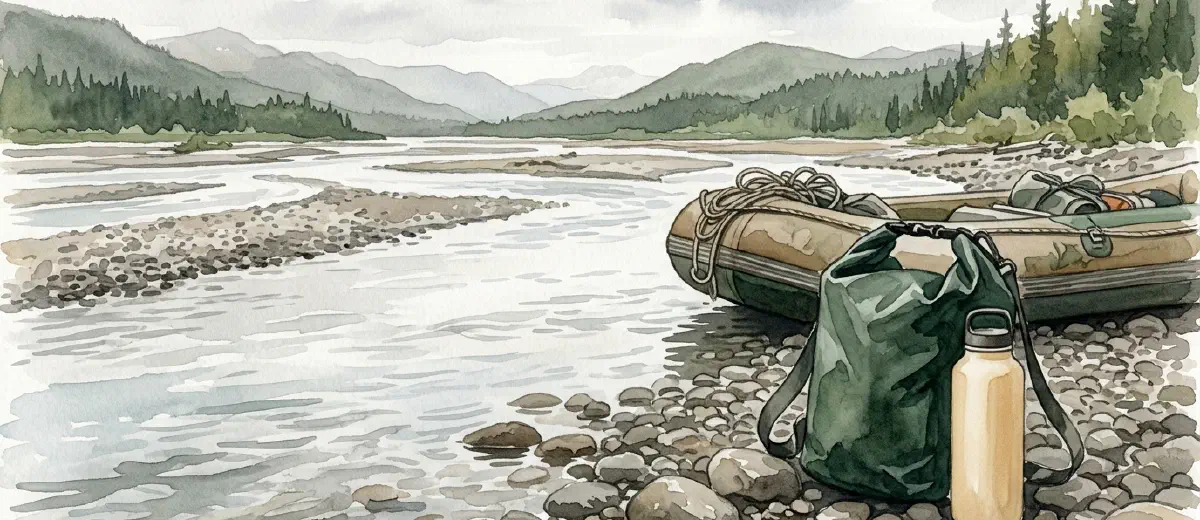
Every week, your potential customers are typing “what to bring on a rafting trip” or “kayak camping gear list” into Google. Most of them land on REI, SectionHiker, or some gear review site that’s never run a trip in your watershed. You’re nowhere in those results - and that’s a winnable problem.
Packing guides and gear lists are among the highest-value, lowest-competition content types available to outdoor operators. They pull in searchers at the exact moment those people are planning a trip. Not browsing. Planning. That distinction is worth real money.
Why packing content ranks when other content doesn’t
Most tour and outfitter websites have two kinds of pages: booking pages and an About Us. Neither generates organic traffic because neither answers the questions people actually search before they book.
Pre-trip informational queries work differently from commercial queries. When someone searches “whitewater rafting Colorado,” they might be comparing options. When they search “multi-day rafting packing list,” they’ve already decided - they just need to figure out logistics. Your packing guide catches them mid-commit.
These queries also have structural SEO advantages. They’re long-tail, which means lower competition. They’re evergreen, which means they accrue authority over years without needing updates. And because they’re tied to a specific activity, a well-written gear page from an actual outfitter beats a generic checklist from a media site almost every time - you have the operational credibility.
The keyword territory no one is claiming
Take a minute to think about the queries you’re ignoring:
“What to wear on a half-day rafting trip” - not covered by Patagonia or REI, because they’re selling gear, not running rafting tours. “Fly fishing gear list for beginners Yellowstone” - not owned by any mass-market site, because it’s specific. “What to bring kayak camping multi-day” - gets searched thousands of times a month, and most of the top results are from gear retailers who’ve never kayaked overnight.
The keyword structure has three layers: activity (“rafting packing list,” “kayak tour what to bring”), trip length (“overnight rafting,” “multi-day,” “day trip”), and location (“Grand Canyon rafting packing list,” “New River Gorge half-day rafting gear”). Idaho River Adventures has a page specifically for Middle Fork Salmon packing. They rank for that query because no one else wrote it. That’s the whole story.
You don’t need to compete with SectionHiker on “backpacking gear list.” You need to own “5-day [your river] rafting packing list” and every variation around your specific operation.
What a good gear page actually contains
The outfitters who rank for packing content share a structure worth borrowing. OARS runs “How to Pack for a Rafting Trip: The Complete Guide.” Northwest Rafting Company has a page that separates warm-weather and cold-weather packing. ROW Adventures publishes 15 river essentials with brief explanations for why each item matters.
What these pages have in common: they’re specific to actual conditions on actual trips. They mention things customers always get wrong (cotton clothing on cold-water rivers, flip-flops on steep terrain). They address the real anxiety behind the search - “Will I be comfortable? Will I embarrass myself by showing up with the wrong stuff?”
Your version should be tied to your trip, your geography, your conditions. An Alaska sea kayaking guide has nothing in common with a Florida Keys snorkeling charter, and the packing lists shouldn’t overlap either. Specificity is what makes your page rank and what makes it useful enough to get booklinked and shared.
A functional gear page covers: what to pack, what not to pack (often more useful), what the operator provides, and one practical pro-tip that signals expertise - “most people overpack on the clothes and underpack on the dry bag space.” That last piece is what gets your page bookmarked, forwarded, and linked.
The double return: SEO traffic and fewer emails
Most operators think about gear pages as marketing content. They’re also customer service infrastructure - and most operators completely miss that second half.
Right now, someone on your team answers “what should I bring?” by email or phone multiple times a week. That’s a 3-minute conversation, easily 10 times a week, 50 weeks a year. A well-written packing page doesn’t eliminate those conversations - but it cuts them significantly, and it means the people who do call already know the basics.
This content also works inside your booking confirmation emails. A link to your packing guide in the confirmation email, sent the moment someone books, sets expectations early and reduces the “I had no idea I needed to bring a dry bag” complaints that kill reviews. We’ve seen operators cut pre-trip customer service emails by 30–40% just by writing thorough gear content and linking to it consistently. The SEO benefit is a bonus on top of an already useful page.
Connecting gear list content to your pre-trip email sequences is a natural move - the page does double duty as both a search asset and a trip-prep communication.
How to structure gear content for search
A packing guide that ranks needs a few specific things in its structure.
The title should lead with the activity and trip type: “River Rafting Packing List: What to Bring on a Multi-Day Trip” or “Fly Fishing Gear Guide for First-Timers in Montana.” Front-load the specific query. Don’t get clever with the title - save that for the body copy.
Headers should break down by category (clothing, gear, food/water, optional items) or by trip phase (at the put-in, on the river, in camp). Both approaches work. The second one works better for multi-day trips because it creates a logical narrative.
Include one section on what not to bring. This is almost always missing from gear pages, and it’s the section customers tell us they found most useful. “Leave the jeans at home. Leave the cotton t-shirts. Leave the rolling suitcase.” This is where your operational experience shows up.
For SEO, your primary keyword belongs in the title, the first paragraph, and one H2 heading. That’s all. Don’t stuff. The organic search value comes from specificity and genuine usefulness, not keyword frequency.
Add a last-updated date and actually update the page when something changes - when you switch dry bag providers, when you update your wetsuit policy, when you add a new trip length option. Fresh signals matter, and your gear page should reflect current operations.
Building a gear content library over time
One gear page is a start. A library is where the compounding value lives.
If you run multiple trip types, each one deserves its own page. A half-day trip and a 5-day expedition need completely different packing lists, and Google treats them as separate queries. If you operate in multiple seasons, consider seasonal variations - cold-water packing is a different article from summer packing on the same river.
Beginners and experienced guests also have different needs. A “first-timers gear guide” and a “what experienced kayakers forget to bring” piece can share a URL structure and build a topical cluster around trip preparation on your site.
Treat packing and gear content as a hub that builds authority rather than a collection of one-offs. Each page handles a specific query. Together, they tell Google - clearly, over time - that your site is the definitive source for trip preparation in your activity and geography.
Getting links and shares without trying
Packing content earns links naturally, which most blog content doesn’t. Gear bloggers, hiking and paddling forums, local tourism sites, and travel planning tools all need to link somewhere when someone asks “what should I bring?” Your well-written, specific gear page is the right answer.
That passive link acquisition builds domain authority over months. It also positions your site as a resource rather than just a booking page, which changes how Google evaluates your entire domain.
The practical move is to write the gear pages first, publish them, and then watch your Search Console data for six months. You’ll almost certainly find queries you didn’t anticipate - searchers asking about specific gear items, seasonal variations, child-specific packing questions - and each of those is a signal pointing toward your next piece of content. This connects directly to understanding what customers are searching before they book and building content around those actual queries.
One gear page is a week’s work, not a month’s
The barrier here isn’t effort - it’s deciding to do it. A solid gear page takes a few hours: one hour to draft based on what you already know, one hour to review with your best guide (they’ll add the specifics that make it real), and an hour to format, add photos of your gear layout, and publish.
Northwest Rafting Company, ROW Adventures, and Idaho River Adventures aren’t running elaborate content programs. They just answered the questions their customers were already asking - and years later, those pages are still generating traffic and turning up in trip-planning searches they’d never have ranked for otherwise.
Your customers are already searching for this information. Whether they find your page or a generic REI checklist is entirely a matter of whether you wrote it.