From page 5 to page 1: a fishing guide's SEO story
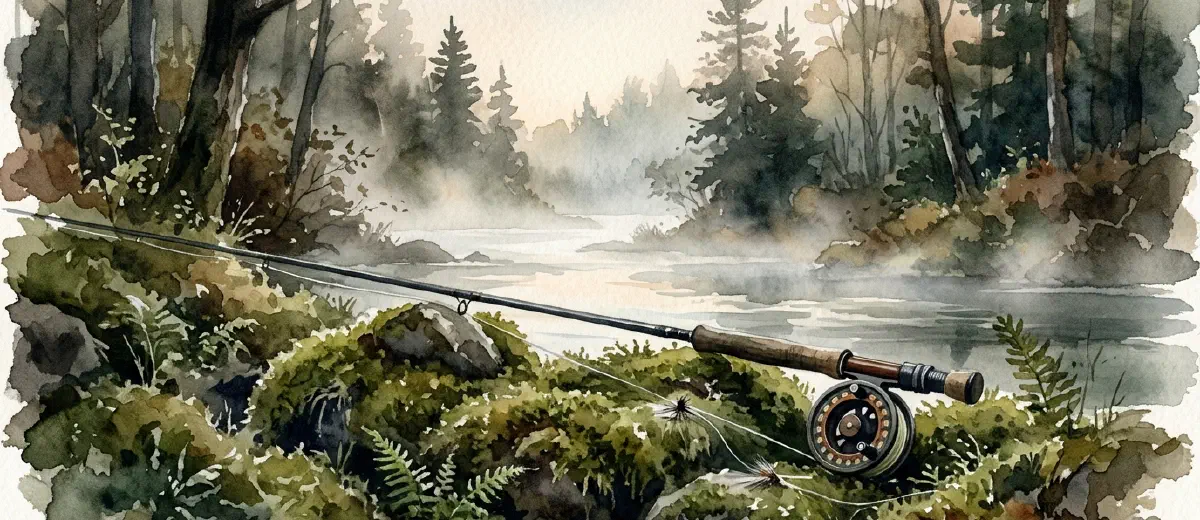
A fly fishing guide in southwest Montana was doing fine on referrals. Repeat clients, word of mouth, a few bookings through a lodge partnership. But when he searched “fly fishing guide near Ennis” on Google, his website was on page five. Fifty-something results down. Functionally invisible.
That was two years ago. The original version of this story tracked his first twelve months of SEO work: technical cleanup, content creation, Google Business Profile optimization, and the slow climb from page five to page one. It ended with 28 organic bookings and about $14,000 in new revenue from search alone.
This is the update. The guide is still in business. The SEO kept working. But the search results page he climbed to the top of looks different now than it did in 2024, and what it takes to stay there has shifted in ways worth paying attention to.
Where things stood at month twelve
By the end of his first year doing SEO, the guide had six pages ranking on page one for their target keywords. Three trip pages, three blog posts. Organic traffic was 130 to 180 clicks per month during peak season. His Google Business Profile had 34 reviews and was showing up in the local map pack for “fly fishing guide near Ennis.”
The work that got him there was not complicated. He compressed images and converted them to WebP. He split a single trips page into three separate pages, each targeting a specific trip type. He wrote twelve blog posts over the winter, all focused on his section of the Madison River. He claimed his Google Business Profile and started collecting reviews after every trip.
Nothing fancy. Just specific content, local signals, and five months of consistent publishing during the off-season. The lead time math worked exactly as predicted: content published in October ranked by March.
What changed in search since then
Google rolled out AI Overviews in mid-2024, and by early 2025 they were appearing on about 40% of all search queries. If you search “best time to fly fish the Madison River” today, you are likely to see an AI-generated summary sitting above the traditional blue links.
That sounds like bad news for a guide who spent a winter writing blog posts to rank for exactly those queries. And for some searches, it is. Ahrefs found that when an AI Overview appears, the click-through rate for the top organic result drops by 58%. The answer is right there on the page. Many people never scroll down.
But here is the part that matters for fishing guides and outfitters: AI Overviews only show up on about 7% of local queries. When someone searches “fly fishing guide Ennis Montana” or “Madison River guided trips,” they mostly still get the traditional results page with the local map pack and ten blue links. The searches that actually book trips, the ones where someone types a location and a service, still work the way they always have.
The guide’s traffic dipped on his informational posts. His “best time to fly fish the Madison” article lost about 30% of its clicks between 2024 and 2025. But his trip pages and his Google Business Profile listing held steady, because those queries still work the old way.
The second year: what he doubled down on
Once it became clear that local signals and trip-specific content were the most protected parts of his search presence, he adjusted.
He stopped writing broad informational content and shifted to location-specific trip pages. Instead of “how to choose a fly rod for Montana rivers,” he wrote “wade fishing the upper Madison between Quake Lake and Lyons Bridge: what to expect in July.” Hyper-local. Hyper-specific. The kind of page that AI Overviews cannot replace because nobody else fishes that exact water from that exact put-in. He also added seasonal detail to each page, noting which months produce the best dry fly fishing and when streamers are the better play. That kind of detail is what separates a page that ranks from a page that sits there.
The Google Business Profile got more attention too. In 2024, he posted occasionally and collected reviews when he remembered to ask. By 2025, a photo went up after every trip within 24 hours. A brown trout on the net with the Tobacco Root Mountains in the background. A client’s first fish on a dry fly at sunset. The 2026 local ranking data shows that Google now weighs what a business has done in the last 90 days more than its historical track record. Freshness is not a bonus anymore. It is a requirement.
His review count went from 34 to 71 over that second year. More relevant, clients started mentioning specific details in their reviews: “amazing PMD hatch in late June,” “caught more fish than I expected on a float from Varney Bridge.” Reviews that contain trip-specific language now carry more weight in how Google evaluates relevance. The 2026 Whitespark survey found that review signals account for 20% of local pack ranking influence, up from 16% three years ago.
The numbers after two years
Heading into his third season with an optimized site, the picture looks like this:
Organic impressions are over 2,400 per month during peak season, double what they were at the end of year one. Organic clicks during the booking months run 220 to 260, even with some informational posts losing traffic to AI Overviews. His Google Business Profile pulls about 900 views per month when the season is running. He has 71 reviews now and responds to every one within two days. Nine pages sit on page one, up from six.
The number that matters most: 43 trips booked through organic search over the second season. Roughly $21,500 in revenue from people who found him on Google.
He nearly doubled his organic bookings from year one to year two. The gains came almost entirely from three things: more trip-specific pages, more GBP activity, and more reviews with specific language. The blog posts still bring some people in, but the bookings come from the trip pages and the GBP listing.
Why this still works and where it gets harder
The core of this story has not changed since the original version. A fishing guide with a thin website, no blog, no reviews, and an unclaimed Google Business Profile is still going to sit on page five. The fix is still the same: build real pages about your actual trips, write content specific to your water, claim and maintain your GBP, and collect reviews from every client.
What has changed is the floor. Two years ago, a guide could rank with a decent website and a few blog posts because the competition was sparse. Today, more guides are doing this work. The agencies that serve outdoor businesses are pushing SEO harder. The bar for what a fishing guide’s website needs to rank has gone up, not because Google got harder, but because more people are in the game.
AI Overviews add another layer. If you are relying on informational blog traffic as your primary lead source, you are going to feel the squeeze. AI-generated summaries are pulling clicks away from “best time to fish” and “what to bring on a guided trip” type posts. But if your strategy centers on trip-specific pages, local keywords, and a strong GBP listing, the local search channel is still wide open. Only 7% of local queries trigger AI Overviews. The map pack is still there. The reviews still matter.
What to do if you are starting from page five today
If you are a fishing guide reading this and your website is where his was two years ago, the same approach still works. The priorities have shifted slightly.
Start with your Google Business Profile. Claim it, fill out every field, upload recent photos, and set your seasonal hours. This is no longer step three. It is step one, because GBP signals now feed directly into how AI search represents your business.
Build individual trip pages. One page per trip type, with specific descriptions, seasonal timing, gear provided, pricing, and location details. Trip pages convert better than any blog post, and AI Overviews have almost no effect on them.
Write content during the off-season, but weight it toward local and trip-specific topics rather than broad informational posts. “Hopper fishing on the Madison in August: where to wade and what to throw” will serve you better than “fly fishing tips for beginners.”
Collect reviews from every single client. Ask them to mention specifics: the river, the trip type, what they caught, what stood out. Those details are ranking signals now.
The guide who started on page five is proof this works. Not because he did anything nobody else can do, but because he did the work during the months when nobody was booking trips. Two winters of consistent effort turned his website from invisible to a booking channel that brought in $35,000 over two seasons.
The river has not changed. The search results have. AI Overviews are real, competition is stiffer, and the bar is higher than it was two years ago. But the guides who show up on page one are still the ones who treat their website like part of the business, not an afterthought. If you are starting from nothing, the best month to begin was last October. The second best month is this one.