From page 5 to page 1: a fishing guide's SEO story
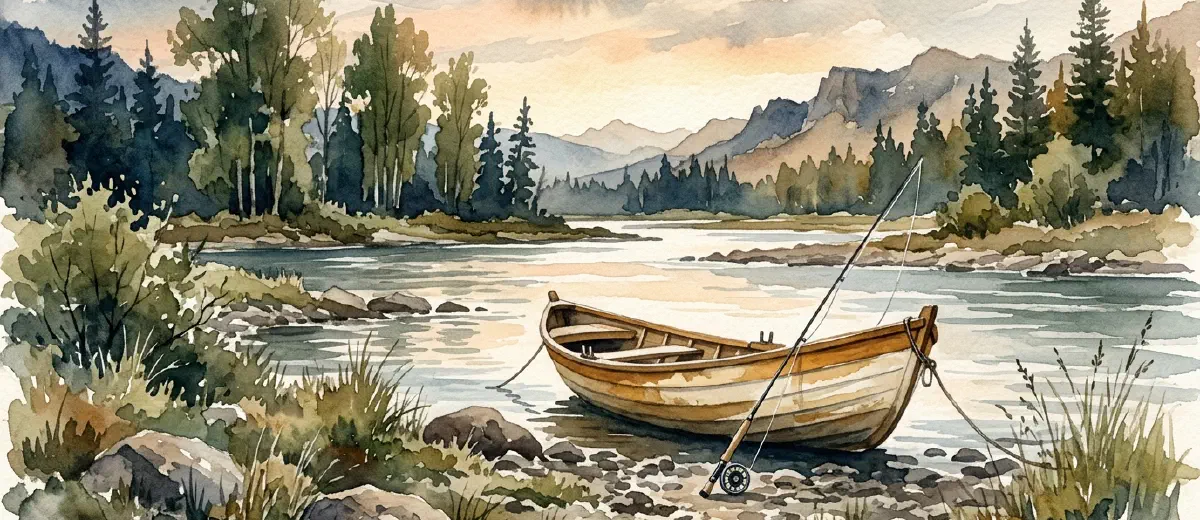
A fly fishing guide in southwest Montana was doing fine on referrals. Repeat clients, word of mouth, a few bookings through a lodge partnership. But when he searched “fly fishing guide near Ennis” on Google, his website was on page five. Fifty-something results down. Functionally invisible.
This is an SEO success story about a fishing guide. Not a brand name, not a big outfitter with a marketing department, but a one-person operation running a drift boat on the Madison River. What happened over the next twelve months is a pretty clean illustration of what SEO can do for a small guide service when the work is done right.
The starting point
His website was a five-page template site. Home, about, trips, gallery, contact. It hadn’t been updated in two years. The trips page listed three offerings in a single paragraph each, with no pricing and a “call for availability” button. The gallery had forty photos with no alt text. Page speed on mobile was brutal, over six seconds to load, mostly because of uncompressed images.
Google Search Console showed the site was getting about 30 organic impressions per month. Clicks from organic search: two. Per month. His Google Business Profile existed but hadn’t been claimed. Someone had left a review three years ago and it sat there unanswered.
The site wasn’t ranking for anything meaningful. Not “fly fishing guide Ennis,” not “Madison River fishing trips,” not “fly fishing Montana.” Page five on a good day. Page nowhere on most.
What changed first: the foundation
The first month was cleanup, not content. The kind of work nobody notices unless they’re looking at the code.
Compressed every image on the site and converted them to WebP. Page speed dropped from six seconds to under two. Added alt text to every photo. “Angler fighting a brown trout on the Madison River near Ennis” instead of “IMG_4832.jpg.” Fixed broken links, added a real meta description to every page, and installed an SSL certificate because the site was still running on HTTP.
Then the structural changes. That single trips page became three separate pages: “Half-day wade trip on the upper Madison,” “Full-day float trip, Varney Bridge to Ennis,” and “Multi-day fly fishing package.” Each with detailed descriptions, seasonal info, what’s included, gear provided, and pricing. Real pages that could rank for real searches.
He claimed his Google Business Profile, chose “Fishing guide service” as the primary category, uploaded twenty photos from the past two seasons, wrote a proper business description, and set his seasonal hours. Then he started asking every client to leave a Google review. Sent a text with the link the evening after each trip.
The content push: October through February
This is where the lead time math matters. Content published in October and November needs months to index and rank. If it’s going to bring in traffic during the booking season (March through June), it has to exist before winter.
Over five months, he published twelve blog posts. Not a crazy volume. About two or three per month, written on winter evenings when the river was frozen.
The topics were specific to his water and his expertise:
“Best time to fly fish the Madison River: a month-by-month breakdown.” Targeting the query that every potential Madison River client types at some point.
“Pale morning dun hatch on the Madison: when, where, and what to tie on.” Targeting anglers who know enough to search by hatch name. High-intent, low-competition.
“Wade fishing vs. float trips on the Madison: how to choose.” Targeting the comparison search that people make when they’re deciding what to book.
“What to bring on a guided fly fishing trip in Montana.” Targeting the gear-prep search from people who’ve already decided to go.
Each post was 600 to 1,000 words. Specific to his section of river. Written in his voice, not marketing-speak. He talked about specific runs, specific access points, specific bugs on the water. The kind of detail that makes a guide’s content rank where generic fishing articles can’t compete.
He also built internal links between everything. Every blog post linked back to the relevant trip page. Every trip page linked to related blog posts. The site went from five disconnected pages to a web of interconnected content that Google could actually make sense of.
The timeline: what happened when
Month 1 (October). Technical fixes and GBP claim. No ranking changes. Two Google reviews came in.
Month 2 (November). First three blog posts published. The trip pages started appearing in Search Console impressions, still page four, but Google was noticing.
Months 3-4 (December-January). Five more blog posts live. The “best time to fly fish the Madison” post started showing up on page three. GBP had eight reviews and he was responding to all of them. Monthly organic impressions climbed to about 200.
Month 5 (February). A small but real inflection point. The “best time” post hit page two. The new trip pages started ranking on page two for “Madison River fly fishing trips.” Organic clicks went from two per month to around 25. He got his first organic booking. Someone found the “full-day float trip” page through Google and booked directly.
Month 6 (March). Search volume for Montana fishing terms started its seasonal climb. The “best time” post reached position seven on page one. Organic impressions crossed 800 in a single month. Organic clicks hit 60. Three bookings came through the website from people he’d never met and who’d never been referred to him.
Months 7-9 (April-June). Peak search season. The compounding kicked in. Four pages were now on page one for their target keywords. The GBP had 22 reviews and was showing up in the local map pack for “fly fishing guide near Ennis.” Organic traffic was averaging 150-180 clicks per month. He booked fourteen trips in that window directly from organic search. People who found him on Google, read the site, and booked without a referral.
The numbers after twelve months
By the following September, the picture looked like this:
Organic impressions: from 30/month to over 1,200/month. Organic clicks: from 2/month to 130-180/month during peak season. Google Business Profile reviews: from 1 to 34. Pages ranking on page one: 6 (three trip pages, three blog posts). Total organic bookings over the season: 28 trips, roughly $14,000 in revenue directly attributable to search.
Fourteen thousand dollars from work he did mostly over one winter. No ad spend. No agency retainer. Just twelve blog posts, three rebuilt trip pages, a claimed GBP, and consistent review collection.
The referrals and repeat clients didn’t go away either. They were still there. The organic traffic was additive, new clients from a channel he’d never had before. And it keeps compounding. Those twelve blog posts don’t expire. They’re still ranking, still bringing people to the site, still booking trips a year later.
What this story actually shows
This isn’t a story about some secret SEO hack. A single blog post can drive hundreds of visitors per month if it targets the right query. Multiply that across a dozen posts and three strong trip pages, add a well-maintained Google Business Profile, and you’ve built an organic traffic engine that works while you’re on the water.
The guide on page five wasn’t there because he was bad at fishing. He was there because his website gave Google nothing to work with. Five thin pages, no blog, no reviews, no local signals. The guide on page one is the same person with the same skills. The difference is twelve months of consistent, specific, not-that-hard work.
Most fishing guides can do exactly what he did. The question is whether they start in October or keep putting it off until the next season slips past.