Drone footage for outdoor marketing: FAA rules, best practices, and what to capture
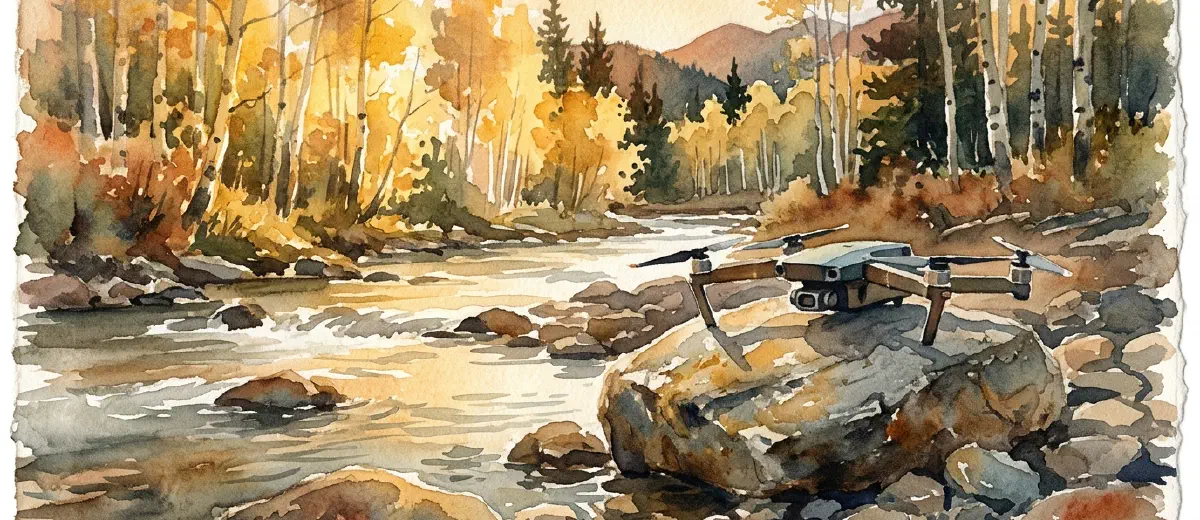
Aerial footage of a whitewater rapid, a ridge traverse, or morning mist rising off a lake used to cost thousands of dollars and a half-day of coordinating. Now a DJI Mini 4 Pro fits in a jacket pocket, weighs under 250 grams, and shoots 4K video that looks like a commercial production. The barrier to drone footage for outdoor marketing isn’t the technology. It’s knowing the rules well enough to stay legal - and knowing what to shoot so the footage actually drives bookings.
This covers both: FAA requirements for commercial drone operations, where you can and can’t fly on the lands your business operates on, and the specific shots worth capturing.
The FAA rules that apply to your business
If you’re flying a drone to market your outdoor operation - capturing footage for your website, social media, or booking pages - that’s a commercial use under FAA Part 107. Doesn’t matter if you’re a solo fishing guide or a 50-person rafting company. Using a drone for business purposes means you need a Remote Pilot Certificate.
The exam costs $175 and takes about two hours at any of roughly 800 test centers across the country. Sixty questions, 120-minute limit, 70% to pass. No flight training required, no minimum hours logged - just the written knowledge test. Prep courses from providers like Pilot Institute or Drone U run around $149, though the FAA’s free study materials cover everything on the test if you want to go that route. Your registration runs $5 per drone, valid three years, and is required for any drone over 250 grams.
The operational limits you need to know: fly below 400 feet above ground level, keep the drone in your visual line of sight at all times, don’t fly over people not involved in your operation, and don’t fly within controlled airspace without an authorization. Night flights are legal without a waiver as long as your drone has anti-collision lighting visible from three miles. Every 24 months you’ll complete free FAA recurrent training to keep your certificate current.
The flying part isn’t complicated. The airspace is.
Where you can’t fly - and this matters a lot for outdoor operators
More outdoor operators get into legal trouble here than anywhere else.
Every National Park unit - Grand Canyon, Yellowstone, Great Smoky Mountains, all of them - has banned drones since June 2014. NPS Policy Memorandum 14-05 covers takeoff, landing, and operation. It doesn’t matter whether you’re filming from the rim or from a commercial rafting permit on the Colorado River below. Violation is a misdemeanor: up to six months and a $5,000 fine. We’ve talked to Colorado rafting operators who didn’t know this applied to their launch sites, which sit inside NPS-administered boundaries.
Designated Wilderness Areas are equally off-limits. Section 4(c) of the Wilderness Act of 1964 prohibits motorized equipment in Wilderness - and FAA has confirmed drones fall under that prohibition. If you run trips in the Boundary Waters, Frank Church, Desolation Canyon, or any of the 800+ designated Wilderness units, no drone flights for marketing.
National Forests are different. Flying in a National Forest is generally permitted under Part 107 rules, as long as you’re outside any Wilderness designations within that forest, clear of any TFRs (temporary flight restrictions - check every time), and away from firefighting operations. The Chatahoochee-Oconee National Forest in Georgia, for example, allows drone operations with those standard restrictions.
State parks vary by state and even by individual park. California prohibits drones in natural preserves and cultural preserves. Some state parks have designated drone launch areas; others ban them outright. Check the specific park’s rules before you show up with gear.
The free B4UFLY app from the FAA shows airspace classes, TFRs, and no-fly zones before any flight. Use it every single time - conditions change, TFRs go up for wildfires or events without much notice. For controlled airspace near airports, use Aloft (formerly Kittyhawk) to get automatic LAANC authorization. Both are free.
The option that makes sense for most operators: hire it out
Getting your Part 107 certification makes sense if you’re flying regularly - say, weekly or biweekly throughout your season. The math works out. But plenty of outfitters are better served by hiring a local drone operator for one or two shoots per season and using that footage across everything.
A professional drone shoot runs $500 to $1,500 for a half day, depending on your region and the operator’s experience level. You’ll walk away with a session’s worth of 4K footage you can cut into a hero video, social clips, and still frames. Hire someone once in June and once in September - shoulder seasons give you different looks - and you’ve covered your visual content for the year.
When you hire out, the pilot holds the Part 107 certificate and takes on the regulatory responsibility. Your job is to brief them on the shots you need, the locations you have access to, and any site-specific restrictions.
If you do go DIY, the DJI Mini 4 Pro (around $760) is the most common choice for operators who want something that travels well, shoots sharp 4K/60fps footage, and stays under the 250-gram registration threshold. For windier conditions - canyon work, ridge flying, coastal locations - the DJI Air 3 ($1,099) handles gusts better and carries a longer battery.
What to shoot: the specific shots that drive bookings
Most drone footage made by outdoor operators is beautiful and useless. Sweeping terrain over empty landscape doesn’t sell trips. The footage that works shows scale, action, and place at the same time - a person inside an environment, not just the environment.
These are the shots worth actually building into your shoot plan:
The pull-back reveal. Start tight on your guides or guests - close enough to see the group - then pull backward and upward to expose the full landscape around them. A kayak on a narrow mountain lake, then the pull-back showing peaks in every direction. This shot formats well for Instagram Reels and YouTube intros.
The orbit. The drone circles slowly around a group at a summit, a rapid, a put-in, or a base camp. You see the people and the full 360-degree environment in one continuous shot. Outfitters in Moab use this around arches and canyon rims.
Top-down bird’s eye. Straight down. Shows river braids, switchbacks in a trail, the geometry of a campsite in a meadow. Works well as a secondary shot after establishing context, and cuts cleanly into shorter social clips.
The low tracking follow. Flying 5 to 15 feet above and behind your guides or guests as they move through terrain. Whitewater kayaking, mountain bike descents, horse strings on a trail. This requires a skilled pilot - don’t attempt it yourself until you’ve logged serious practice time - but it’s the shot that makes viewers feel like they’re in the experience.
Static wide with action passing through. The drone holds position while your guests, boats, or horses move through frame. Compositionally simple, easy to execute, and reads well at any scale from billboard to phone screen.
The consistent thread: people need to be in the shot. Empty wilderness is a screensaver. The second a guide or guest appears in frame, the viewer starts picturing themselves there.
Planning a shoot that doesn’t waste your time or theirs
Drone batteries last 20 to 34 minutes depending on conditions. Wind, cold, and aggressive maneuvers drain them faster. A half-day shoot means three or four batteries minimum, and you’re racing golden hour.
Plan your shots before you arrive. Write down five shots in priority order. Know which location requires the most setup time and start there. Brief whoever is going to be in the footage - guides, guests, horses - on their role in each shot so you’re not losing battery time to redirects.
Shoot at golden hour when you can. The 45 minutes after sunrise and before sunset give you warm directional light that makes outdoor footage look professional regardless of the drone you’re flying. Midday sun is flat and harsh; footage shot at 2 pm on a cloudless day rarely makes the final cut.
Check weather before every shoot. Wind over 20 mph is the functional ceiling for most consumer drones. Overcast days actually work well for ground-level action footage - soft light, no harsh shadows - but not for the dramatic landscape reveals where you want sky texture and color.
Save your full-resolution files. DJI shoots in a format called D-Log that comes out flat and desaturated - that’s intentional, it gives your editor more to work with in post. Hand raw files to a contractor and they’ll know exactly what to do. If you’re editing yourself, download a free LUT (look-up table) designed for your specific drone model; it gets you a natural color grade in about 30 seconds.
Getting more from footage you already have
If you’ve been capturing drone footage but not using it consistently, a repurposing plan fixes that fast. One four-minute hero video can yield six to eight 15-30 second Reels, three or four still frames for your Google Business Profile, a 60-second trip preview on your booking page, and fresh seasonal thumbnails. You don’t need more footage - you need to actually use what you have.
The video content and SEO guide for outdoor businesses covers how drone footage fits into search visibility specifically. If you want to think through the full video content system before investing in a shoot, this piece on filming outdoor adventures with a phone gives a useful baseline for what you actually need. And the repurposing framework here shows how to pull the most out of each shoot across every channel.
The operators who get the most out of drone footage treat it like a seasonal harvest - two or three shoots timed to peak conditions, then systematic distribution across every channel for the next six months. One good shoot in mid-September, when fall color peaks and crowds thin out, can carry a rafting company’s visual content through the following spring.
Start with the legal checklist: confirm your operating areas are drone-legal, get your Part 107 or hire someone who has it, and check B4UFLY the morning of every shoot. Then get a pilot in the air during a trip when your best guides are out and conditions are good. The footage will sell the experience better than anything you can write.


