How to create location-specific landing pages for each launch point or trailhead
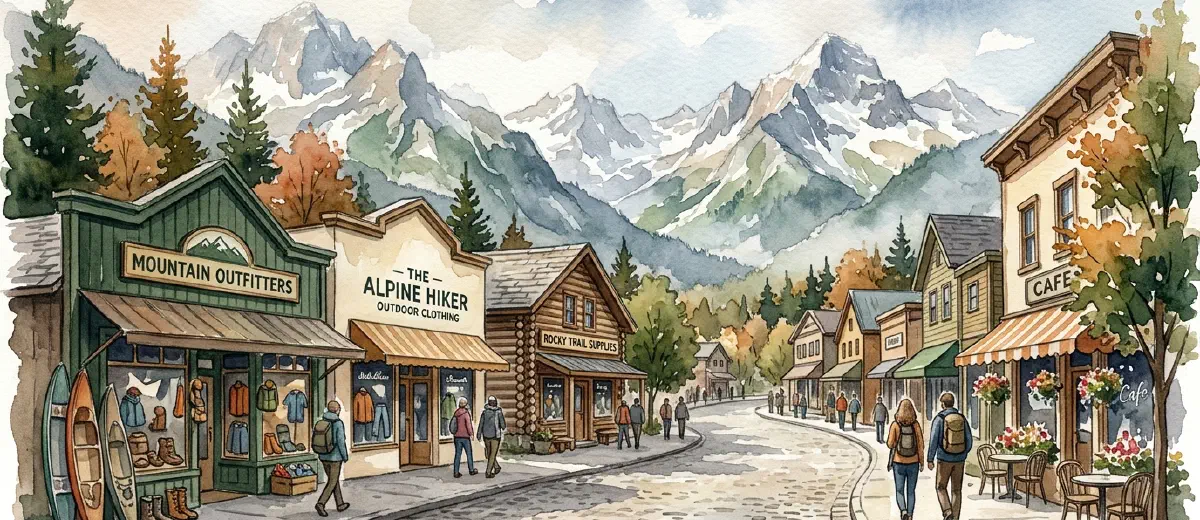
Most outdoor businesses have a single “Locations” or “Where We Operate” page that lists every put-in, trailhead, and launch point in a bullet list. It checks a box. It does almost nothing for search.
When someone types “kayak rental Elk River put-in” or “guided hikes Rattlesnake Trailhead,” Google wants a page that matches that specific location. A bullet point buried halfway down a list page won’t get you there. A dedicated page for each launch point or trailhead gives you a real shot at showing up in local results, the map pack, and organic listings all at once.
KODI Rafting in Colorado figured this out. They created separate pages and Google Business Profiles for each of their operating locations: Breckenridge, Buena Vista, Frisco, Idaho Springs, and Kremmling. Organic traffic grew over 45 percent. One page per location. Not one page for all locations.
Pick which locations get their own page
You probably operate from more locations than you realize. Start by listing every physical spot where a customer begins or ends a trip with you. For a rafting company, that means every put-in and takeout. For a hiking guide, every trailhead. For a fishing outfitter, every access point on every river or lake you work.
Then prioritize. Your highest-volume locations come first. After that, look at which locations people actually search for by name. If “Browns Canyon” or “Elk Creek Trailhead” appears in Google autocomplete when you start typing, people are looking for it, and you want a page there.
You don’t need 30 pages on day one. Start with your top five. Add more over time.
What goes on each location page
A location page is not a trip description with a different headline. It is a page about a place, written for someone who already knows that spot and wants to know what you offer there.
Here is what each page needs:
- The location name in your H1 tag and page title, phrased the way a customer would search for it. “Nantahala River Put-In at Patton’s Run” works. “Location #3” does not.
- A couple paragraphs about the location itself. What’s the terrain like? What should someone expect when they show up? This is where you earn the unique content that Google rewards.
- Your specific services available at that location, with pricing if possible. If you run half-day and full-day trips from the Elk Creek put-in but only full-day trips from the upper canyon, say so.
- Driving directions and parking information. Include the physical address or GPS coordinates. Mention landmarks. “Turn left at the gas station on Route 19, the gravel lot is 0.4 miles on your right” is the kind of detail that builds trust and tells Google this page is about a real place.
- An embedded Google Map showing the exact spot.
- Photos taken at that specific location. Not stock photos. Not photos from a different river section. Actual images from that put-in, that trailhead, that stretch of water.
- Reviews or testimonials from customers who did a trip at that location.
- A booking widget or clear call-to-action that lets someone reserve a spot from the page.
Write content that is actually different on each page
This is where most businesses fall short. They create a template, swap out the location name, and paste the same description across 10 pages. Google sees through it. Visitors do too.
Each page needs content that could only be true about that one location. Arkansas River Tours built a single optimized page around Colorado Springs rafting trips that earned a featured snippet and pulled in roughly $11,000 in bookings. The page worked because it was specific to that corridor of the river, not a generic rafting sales pitch with a city name dropped in.
Write about the water conditions at that particular put-in. Describe the view from that specific trailhead. Mention the seasonal changes that affect access. If the parking lot floods in spring or the trail gets icy in November, say so. Local knowledge is what separates your page from a directory listing, and it is exactly the kind of detail that trip guides built around real experience tend to rank well for.
Think about the questions customers ask you about each spot. Those questions are your content.
Add the technical pieces that help you rank
Good content gets you halfway. The technical side closes the gap.
Add LocalBusiness schema markup to every location page. This tells Google your business name, address, phone number, hours, and geo-coordinates in a format it can read directly. Each page gets its own schema block with the correct details for that spot. Schema markup is less complicated than it sounds, and it matters for whether you appear in local results.
Make sure your NAP (name, address, phone number) on each location page matches your Google Business Profile listing exactly. Letter for letter. A kayak rental company in Lake George, New York increased their top-10 search positions by 221 percent over three months, according to a Mannix Marketing case study. Consistent NAP data and location-specific pages were central to that result.
URL structure matters too. Use a clean path like /locations/nantahala-river-put-in/ or /trailheads/rattlesnake-creek/ rather than /page?id=47. Put the location name in the URL slug.
Internal linking ties it together. Link each location page to your main services page, your booking page, and any blog posts that reference that specific spot. Link between location pages where it makes sense, like connecting an upstream put-in page to a downstream takeout page on the same river.
Connect each page to your google business profile
If you have a physical presence at a location, or if you regularly meet customers there, you may qualify for a Google Business Profile for that spot. KODI Rafting created separate GBP listings for each of their five Colorado locations, and each listing pointed to the matching location page on their site rather than the homepage.
GBP listings drive the local map pack: those three business results with the map that appear at the top of local searches. When your GBP points to a location-specific page instead of your homepage, Google gets a clearer signal about where you operate and what you do there.
Not every launch point or trailhead will qualify for its own GBP. Google requires a real business presence. But for the spots where you have a physical base, a storefront, a check-in point, or a staffed kiosk, set up a profile and connect it to the matching page. If you haven’t done this yet, start with the basics before building out location pages.
Maintain and update your location pages
Location pages are not a build-once project. Conditions change. Access roads close. Water levels shift between seasons. Trails get rerouted.
Update each page when things change. Add new photos each season. Swap in recent testimonials. If you start offering a new trip type from an existing location, add it to that page.
A page last updated two years ago with outdated pricing and a closed access road does more harm than good. Review your location pages at the start and end of each season. Twenty minutes per page, twice a year, keeps them accurate. The Lake George kayak company didn’t get 221 percent growth from a one-time build. They ran a sustained three-month effort with ongoing content updates and local signals. The pages that rank are the ones that get maintained.