Behind-the-scenes content: what your guides can film that customers love
Your guides are doing something every morning that potential customers would find fascinating - and almost none of it ever makes it onto social media.
The raft rigging at the put-in. The 5 AM bait prep on a charter dock. The methodical gear check before a half-day kayak tour. This is behind-the-scenes content that outdoor businesses are sitting on, largely unused, while posting the same action shots and five-star review screenshots as everyone else.
Behind-the-scenes content for outdoor guides works because it does two jobs at once: it builds social media engagement, and it pre-sells your guests before they ever fill out a booking form.
Why behind-the-scenes content converts better than highlight reels
Most outdoor business social content shows the best moment of a trip - the fish in the net, the raft dropping into the rapid, the summit view. Guests love this. They watch it, maybe they save it, occasionally they follow.
BTS content does something different. It shows a potential guest what happens before they show up, and that answers the question they’re actually asking: do these people know what they’re doing?
A 30-second clip of your lead guide checking throw bags and counting PFDs before loading the raft is not glamorous. It consistently outperforms glamour shots for comments and saves, because it’s specific, it’s credible, and it’s rare. Nobody else in your market is posting it.
The connection to bookings is real. When someone watches your 5 AM dock prep video and thinks “this person was already working while I was still asleep,” they book with more confidence and fewer questions. You’re not just filling their feed - you’re closing them.
The prep ritual: your highest-value daily content
Every guide has a pre-trip ritual. Most take 30-45 minutes before guests arrive. That window is a content goldmine that the majority of operators ignore entirely.
What works in this category:
The gear load-out. Setting up a phone on a small tripod or clamp while you load dry bags, PFDs, first aid kit, and lunch into a dry box takes 20 seconds of setup. The resulting clip shows volume, organization, and competence. Customers who’ve never been on a guided trip genuinely don’t know what goes into it.
The site walk. Many guides do a walk of the launch area, trailhead, or put-in before guests arrive - checking conditions, flagging any hazards, picking the best spot for the safety briefing. Film a 15-second walk with a quick verbal note about what you’re checking. Guides on the Nantahala River in North Carolina who started doing this in Reels saw their comment sections turn into booking inquiries.
Equipment inspection. The visual of laying gear out, checking harnesses, or inspecting ropes is compelling even to people who don’t know what they’re looking at. It reads as: these people take this seriously.
The weather or conditions check. A guide on a kayak charter in the Florida Keys started filming a 20-second morning clip at the dock, checking wind and tide on his phone, looking at the horizon, then saying “here’s what we’re working with today.” Guests commented on it constantly. It made him feel like a local authority - because he is.
The safety briefing moment
Most outfitters treat the safety briefing as a necessary chore. Guests often see it the same way. Film a short clip from it.
You don’t need to post the whole briefing. A 10-15 second cut showing your guide engaged with a group - hand signals, posture, the serious-but-friendly tone - communicates that your operation runs a tight ship. This matters enormously to guests who are nervous about the activity.
First-time rafters, first-time zipliners, first-time paddlers - these are your best customers, and they’re also the most anxious. BTS content from the safety briefing tells them: we do this right, you can trust us.
This style of content works particularly well on Instagram Stories and Reels. Post it the morning of a trip while it’s fresh, not three days later when the context is gone.
What guides can actually film solo
The main objection from guides is that they can’t film and work at the same time. This is largely a gear problem, not a time problem.
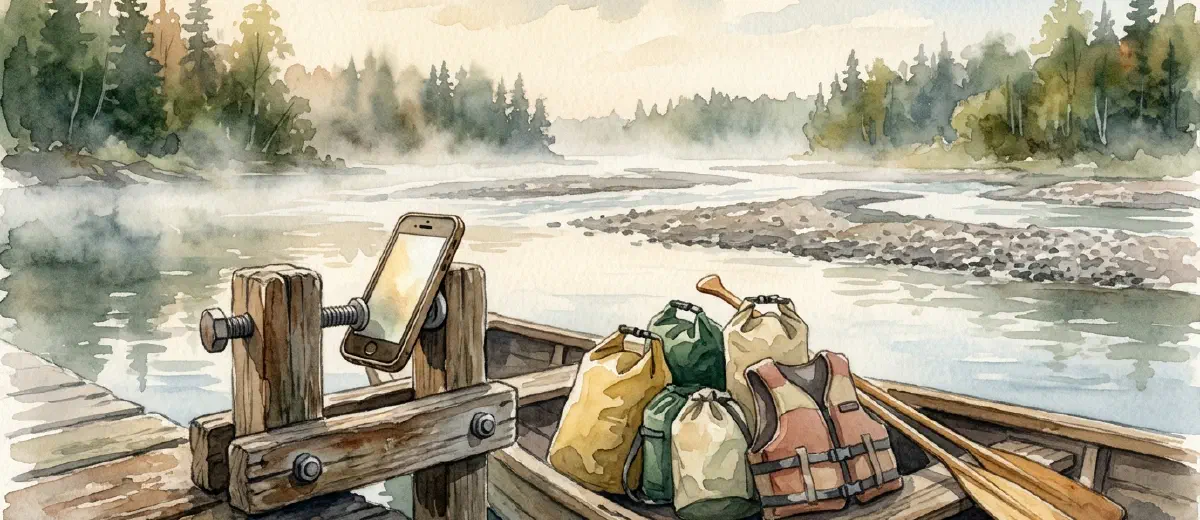
A $25 phone clamp mounted to a boat rail, cooler, or vehicle door handles the static shots. A $15 phone chest mount or GoPro chest harness handles the action. Neither requires a second person.
The workflow is simple: mount the phone, hit record, do your work, stop recording later. You’ll have 2-4 minutes of raw footage from a 20-minute prep session. From that, you’ll cut one 30-second clip. That’s your post.
Guides working for kayak outfitters on the Columbia River Gorge in Oregon have been doing this for two-plus years with nothing more than a phone and a $20 clamp from Amazon. Their prep content gets three to four times the reach of their action footage. The algorithm rewards content that keeps people watching, and people watch prep content because it’s genuinely interesting - not because it’s visually stunning.
For anything requiring sound - conditions checks, gear walk-throughs, brief verbal explanations - a $30 clip-on lapel mic connected to the phone makes the audio professional enough. Wind is the enemy outdoors; a basic windscreen foam cover costs less than $5 and solves 80% of the problem.
Specific shot types that perform
Not all BTS content performs the same. Some types get scrolled past; others stop thumbs cold.
The overhead flat lay. Lay all your gear out on a flat surface and film straight down. A fishing guide’s fly boxes, tippet, net, and indicators arranged neatly. A hiking guide’s first aid kit contents. This shot reads as expertise and gets saved at high rates - people bookmark it, then come back to it when they’re closer to booking.
The process close-up. A tight shot of hands tying a knot, threading a harness buckle, threading a fly line. Slow and deliberate. People watch these in full even when the task is unfamiliar to them. Something about watching a skilled person do a skilled thing is deeply satisfying.
The location reveal. Film the empty launch site, trailhead, or put-in before guests arrive. Early light, quiet, just you and the water or trail. Caption it with where you are and what’s coming. This builds location authority faster than anything else - you own that spot in your audience’s mind.
The side-by-side comparison. Packed boat versus empty boat. Trail conditions from yesterday versus today. Contrast is visual, immediately understandable, and gives you something specific to say in the caption.
The formats that perform on TikTok tend to work on Reels with minimal adjustment. YouTube Shorts rewards slightly longer clips with more information. Don’t over-optimize any single clip for one platform at the expense of it feeling natural.
Turning guides into consistent content creators
The biggest obstacle isn’t equipment or skill. It’s habit. Most outfitters start with good intentions and post three videos in two weeks, then go quiet until next season.
Guides who actually stick with it are doing three things. They’ve made filming part of the pre-trip checklist - mount the phone at the same time you do the same prep step every day. They’ve given themselves permission to post imperfect content. The clip doesn’t need color grading; the caption doesn’t need to be clever. And they understand what their audience is actually curious about, which is almost always some version of: “what is this experience actually like, and will I be in good hands.”
We’ve watched this fall apart at plenty of operations when the filming depends entirely on one enthusiastic guide who eventually burns out or leaves. Build rotation into it. If you run multiple guides, assign filming on a rotating basis. One guide covers Monday and Wednesday; another does Thursday and Saturday. Four posts a week from content that’s already being created - you’re just choosing to document it.
For outfitters who want to go deeper on the repurposing side, a single prep video can become an Instagram Reel, a Story, a clip in a longer YouTube video, and a frame pulled for a static image post. The content repurposing system covers this workflow in detail, and the guide to filming outdoor adventures with a phone is worth working through with your lead guides before the season starts.
What not to film
A few things look like BTS content but consistently underperform or cause problems.
Logistical complaints. Guides venting about a late delivery, traffic at the put-in, or a difficult guest - even lightly, even framed as humor - reads poorly to potential customers who imagine themselves as the next person on that raft.
Forced blooper content. Manufactured “funny fail” clips are obvious. People scroll past them. If something genuinely funny happens, film it. But manufacturing it is a waste of time and makes experienced operators look desperate for relatability.
Low-light footage. If prep happens before dawn and the camera is struggling, skip the post. Grainy, shaky footage with no clear subject is the fastest way to look amateurish - the opposite of what you’re going for.
Connecting bts content to your booking funnel
BTS content builds trust and reach, but it needs somewhere to send interested viewers. Your Instagram bio, TikTok bio, and YouTube description should all link to your booking page or a trip page - not a general homepage.
When you post a prep clip with a caption like “rigging up for a full-day float on the lower Deschutes - book link in bio,” you’re connecting a compelling content moment to a concrete action. The people who watch prep content are often in research mode, which means they’re close to booking. Don’t leave that moment without a path forward.
The Instagram strategy guide for outdoor businesses covers bio optimization and link-in-bio tools worth using. The short-form video ideas list has 50 specific prompts if you run out of ideas three weeks into the season.
Your guides are doing something genuine and interesting six days a week. The work is already happening - you’re just not filming it yet. Pick one prep moment tomorrow morning, set up a phone on a clamp, and see what you get. Most operators are surprised by how good the raw material already is.


